
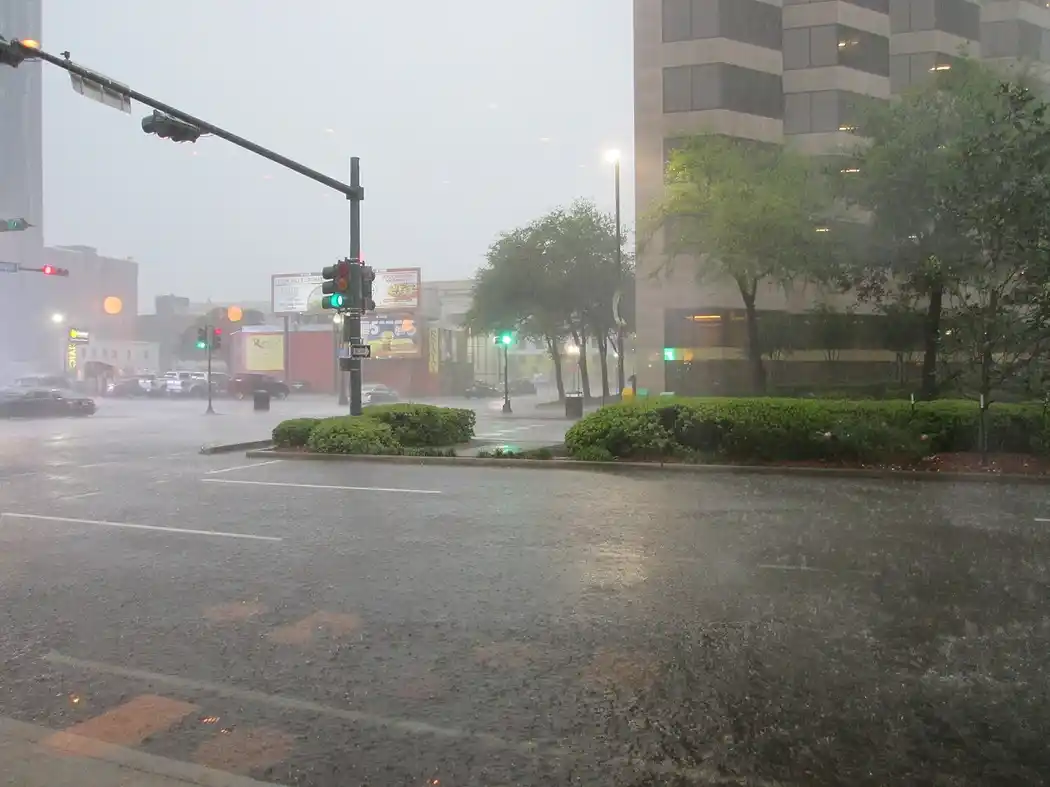
You stepped out for two minutes without an umbrella, and now you are writing about it: “My clothes were very wet. The street was very wet. Everything was very wet.” The word wet is doing all the work, and “very” is not helping it. English actually has a whole ladder of words for wetness — one for a shirt that is barely damp, one for shoes that squelch, one for a field that has turned into a pond — and picking the right rung makes your writing instantly more precise.
This guide gives you 25+ synonyms for very wet, organized by the job each word does. Some words describe things that are only slightly wet. Some describe clothes and people who are wet all the way through. Some are made for rain, and some are made for ground that cannot hold another drop. Scan the quick answer box, find your level on the ladder, and then read the word-by-word entries for the exact shade you need.
Quick Answer: The Best Synonyms for Very Wet
If you only need one replacement right now, start here:
- Soaked — the all-purpose upgrade. Wet all the way through: “We got soaked on the walk home.”
- Drenched — covered in water, usually by rain or a sudden splash: “A passing truck drenched the sidewalk crowd.”
- Sopping wet — as wet as something can get, dripping: “His socks were sopping wet inside his boots.”
- Saturated — holding all the water it can hold, like a sponge at its limit: “The saturated soil could not absorb another drop.”
- Sodden — heavy, soggy, and ruined by water: “She peeled off her sodden jacket and hung it by the door.”
- Damp — only a little wet, and usually unwelcome: “The basement walls felt damp.”
For the full picture — when each word works, when it sounds wrong, and how strong each one is — use the ladder below.
The Very Wet Ladder at a Glance
Think of wetness as a scale from 1 to 4. Level 1 is “slightly wet.” Level 4 is “this cannot possibly get any wetter.” Every word in this article sits somewhere on that scale, and the table sorts them for you. If you are hunting for slightly wet synonyms specifically, stay on Level 1. If something is wet through and through, jump to Levels 3 and 4.
| Word | Strength | Best for | Quick example |
|---|---|---|---|
| Damp | 1 | Walls, clothes, bedding, air | The towels still felt damp. |
| Moist | 1 | Cake, soil, skin, lips | Keep the cake moist, not dry. |
| Clammy | 1 | Skin, hands, cold surfaces | His palms felt clammy. |
| Dank | 1–2 | Basements, cellars, caves | A dank smell rose from the cellar. |
| Dewy | 1 | Grass, leaves, mornings | Dewy grass wet her shoes. |
| Misty | 1 | Windows, mirrors, light rain | The bathroom mirror turned misty. |
| Soaked | 2–3 | Clothes, people, paper, ground | We were soaked by the time we got home. |
| Drenched | 3 | People, clothes, anything rained on | The drenched hikers kept walking. |
| Saturated | 3–4 | Soil, sponges, cloth, colors | The saturated sponge dripped. |
| Sopping wet | 4 | Clothes, hair, anything dripping | Her hair was sopping wet. |
| Dripping wet | 4 | Hair, clothes, umbrellas | He came in dripping wet. |
| Wringing wet | 4 | Laundry, clothes you can twist water out of | The shirt was still wringing wet. |
| Sodden | 4 | Clothes, ground, paper, bread | Sodden leaves clogged the drain. |
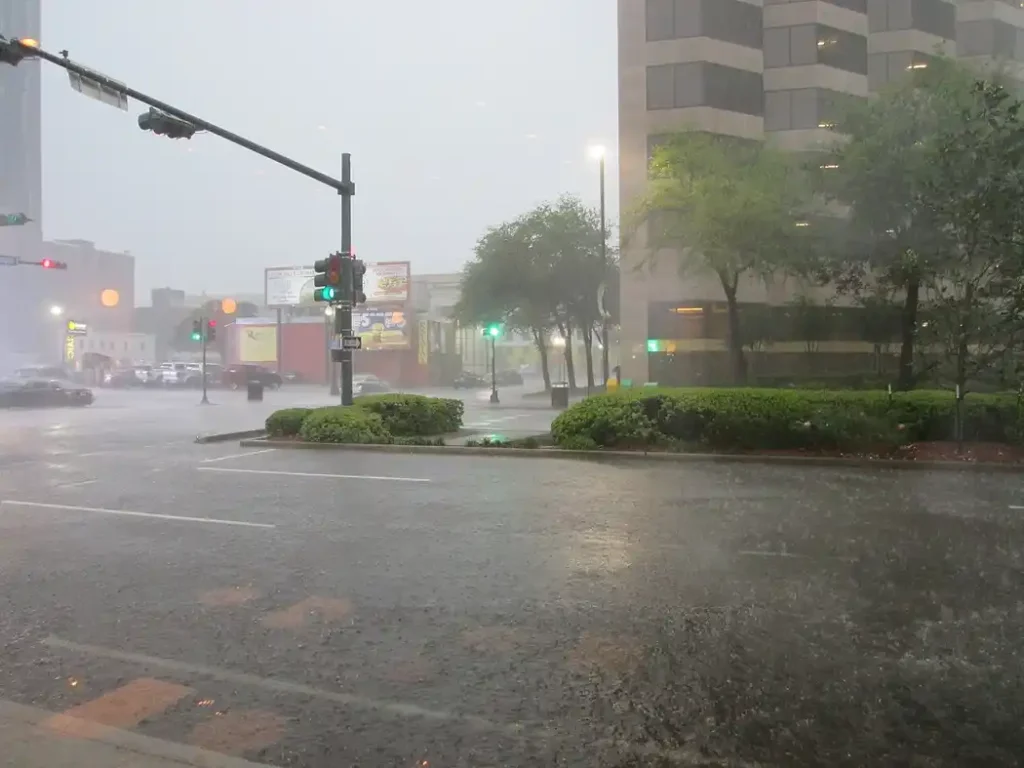
| Rain-soaked | 3 | Streets, clothes, cities | Rain-soaked streets shone under the lights. |
| Storm-drenched | 3–4 | Landscapes, towns, fields | The storm-drenched valley flooded next. |
| Bedraggled | 3 | People and animals after rain | The bedraggled dog shook itself dry. |
| Soggy | 2–3 | Ground, food, paper, cardboard | The soggy fries went uneaten. |
| Waterlogged | 3–4 | Soil, fields, boats, wood | The waterlogged field was unusable. |
| Swampy | 3 | Low ground, trails, yards | The trail turned swampy after the storm. |
| Boggy | 2–3 | Soft wet ground, marshes | We picked our way across boggy ground. |
| Marshy | 2–3 | Land near water, wetlands | Marshy land stretched along the river. |
| Flooded | 4 | Streets, rooms, fields under water | The flooded road closed at noon. |
| Awash | 3–4 | Decks, streets, surfaces covered in water | The deck was awash after the wave. |
| Inundated | 4 | Towns, land, formal writing | Low neighborhoods were inundated. |
| Deluged | 4 | Places hit by a sudden rush of water | The underpass was deluged in minutes. |
Keep this scale in mind as you read: a word can be strong but wrong. Soggy is strong, but it belongs to texture — fries, cardboard, soil — not to a person. Bedraggled is not really about the amount of water at all; it describes how a wet person or animal looks. The entries below sort out those traps one word at a time.
Level 1: Slightly Wet — Damp, Moist, and Friends
These six words describe the bottom of the ladder: a little water, not much, often in places where water does not belong. They are the words you want for “slightly wet” — and two of them, moist and damp, hide the single most useful distinction in this whole article.
Damp — a little wet, in a way that feels unpleasant or unwanted. Damp lives indoors: damp walls, damp bedding, a damp towel that never quite dried, a damp basement smell. Example: The spare room smelled damp after a week of rain. If the wetness is a problem, reach for damp.
Moist — a little wet, in a way that is good or wanted. Moist belongs to cake, soil in a garden bed, skin cream, and lips. Example: The chocolate cake stayed moist for three days. Nobody brags about a damp cake, and nobody complains about a moist basement — that contrast is the whole lesson, and the teaching box below explains it fully.
Clammy — slightly wet and cold, usually about skin or hands, with an uncomfortable sticky feeling. Example: His hands were cold and clammy before the interview. Clammy almost always signals nerves, fever, or a chill room; you would not use it for a raincoat.
Dank — damp, cold, and dark, with a musty smell. Dank is damp’s gloomier cousin, made for basements, cellars, caves, and tunnels. If a place feels wet and shadowy at once — the kind of corner where you would also study synonyms for very dark — dank is probably your word. Example: A dank chill came up the cellar stairs.
Dewy — lightly wet with dew, the thin water that forms on grass and leaves overnight. Dewy is the prettiest word on this level; it sounds fresh and morning-like. Example: The dewy lawn sparkled at sunrise. Use it for nature and mornings, not for laundry.
Misty — covered with or full of fine droplets, like a mirror after a shower or a window in light rain. Example: She wiped the misty bathroom mirror with her sleeve. A misty morning is also soft and hushed; if it is the sound of that morning you want to describe, our guide to synonyms for very quiet covers words like hushed and muted.

Moist vs. Damp: The Distinction Nobody Teaches
Here is the rule worth memorizing, because flat synonym lists never mention it: moist and damp describe the same amount of water — the difference is whether the water is welcome.
- Moist = slightly wet, and that is a good thing. Moist cake, moist soil, moist skin, a moist cloth for wiping a baby’s face. Moist keeps things soft and alive.
- Damp = slightly wet, and that is a bad thing. Damp walls, damp clothes, damp matches that will not light, a damp mattress in a tent. Damp means water got in where it should not be.
Neither word is “wrong.” Moist is not a mistake and damp is not more formal — they are a matched pair split by feeling. Ask one question: do I want this thing to be wet? If yes, write moist. If no, write damp. That single choice will make your English sound native-level precise, because it is exactly the choice native speakers make without thinking.
Levels 2–4: Wet Through — Soaked, Drenched, and Sopping Wet
Now we climb. These words describe things that are not just touched by water but filled with it: shirts you could wring out, shoes that squelch, hair that drips. This is the level most people mean when they search for synonyms for very wet, and it is also where learners make their biggest mix-ups — especially between soaked and drenched.
Soaked — wet all the way through; the water has gone into the thing. Soaked is the safest all-purpose strong word on the ladder: soaked clothes, a soaked notebook, soaked ground, soaked through to the skin. Example: My shoes were soaked after I stepped in the puddle. When in doubt, soaked rarely sounds wrong.
Drenched — covered in water that came over something, usually rain or a thrown bucketful. Here is the distinction worth learning, the one dictionaries note but lists never teach: soaked = the liquid went in; drenched = the liquid poured over. A sponge gets soaked; a pedestrian gets drenched. Example: The crowd was drenched when the storm broke at halftime. In practice the two overlap a lot, but drenched almost always involves water arriving suddenly from outside.
Saturated — holding the maximum amount of water possible; nothing more can be absorbed. Saturated started as a science word (a saturated solution, saturated soil), which is why it sounds precise and slightly formal. Example: After three days of rain, the saturated ground could hold no more. Because saturated already means “at the limit,” never write “very saturated” — see the mistakes section below.
Sopping wet — so wet that water drips and pools; the everyday champion of Level 4. Sopping wet is informal, vivid, and perfect for clothes, hair, and shoes. Example: The kids came home sopping wet and left puddles in the hall. If something can drip, it can be sopping wet.
Dripping wet — literally dripping; the most visual phrase on the ladder. It works best for people, hair, and clothes at the moment they come in from the rain. Example: He stood in the doorway, dripping wet, holding a broken umbrella. Use it when you want the reader to see the water falling.
Wringing wet — wet enough that you could twist water out of it by hand. This phrase belongs to laundry and cloth: shirts, towels, socks. Example: The towels were still wringing wet when the dryer broke. It is a lovely, old-fashioned-feeling phrase that instantly tells the reader exactly how wet the cloth is.
Sodden — heavy, soft, and spoiled by too much water. Sodden is where the ladder turns negative: a sodden jacket is not just wet, it is a burden; sodden ground gives under your boots; sodden bread has collapsed. Example: She dragged her sodden suitcase up the stairs. Choose sodden when the wetness has damaged the thing.

A quick usage note before we move on: several of these words pair naturally with laundry, because washing is the one place we deliberately make things wet through — and then want them clean and dry again. That is why wringing wet and sopping wet show up so often in laundry sentences: they measure exactly the water a wash leaves behind.
Wet from the Weather: Rain-Soaked, Storm-Drenched, Bedraggled
Some wet words are born outdoors. They describe what rain and storms do to streets, clothes, people, and whole landscapes — the natural answer if you are looking for another word for getting wet in rain.
Rain-soaked — thoroughly wet because of rain; the cause is built into the word. Rain-soaked streets, rain-soaked clothes, a rain-soaked city. Example: Rain-soaked commuters crowded under the awning. It is a compound adjective, so it usually sits before a noun or after a linking verb, and it always points the finger at the weather.
Storm-drenched — rain-soaked’s bigger, more dramatic sibling: not just rain, but a storm did this. Example: The storm-drenched hillsides began to slide. Save it for serious weather; it would sound overblown for a light shower. When the storm itself is the subject — the kind where rain is not just wet but very loud against the windows — storm-drenched earns its drama.
Bedraggled — wet, limp, and messy-looking after rain. Bedraggled describes appearance, not volume: a bedraggled dog, bedraggled hair, a bedraggled traveler at the station. Example: The cat came in bedraggled and deeply offended. It carries a hint of sympathy or gentle humor, which is why writers love it for characters.
Weather wetness also has its own cold branch: rain in November is not just wet, it is the kind of wet that chills you to the bone, and pairing these words with synonyms for very cold — bitter, freezing, bone-chilling — makes storm writing feel real.
Idioms for Getting Wet in the Rain
- Soaked to the skin — completely wet, through every layer of clothing. “By the time the bus came, we were soaked to the skin.”
- Drenched to the bone — the same idea, turned up: the wet feels like it reached your bones. “He arrived drenched to the bone and shivering.”
- Like a drowned rat — a humorous comparison for a person who looks thoroughly wet and miserable. “She came home looking like a drowned rat.” Use it playfully, never in formal writing.
- Sopping wet — the idiom hiding in plain sight; on its own it already means “as wet as possible.”
Caution Box: “Wet” Idioms That Are NOT About Water
Two famous expressions will trick you, because neither one describes anything wet:
- Wet behind the ears means young and inexperienced — a new employee, a rookie player. It has nothing to do with rain or water, and students mix this up constantly. Never use it to describe someone who got caught in a storm.
- A wet blanket is a person who spoils everyone else’s fun — the guest who kills the mood at a party. Also not water.
If the sentence is about personality or experience, you have left the water ladder entirely. Put these two in a separate mental drawer.
Wet Ground and Places: Soggy, Waterlogged, Flooded
The last job belongs to the land itself: fields, trails, yards, and streets that have taken on more water than they can handle. These words are about ground and places, not people — and at the top of this section the ladder turns into a warning, because ground that is too wet is damaged ground.
Soggy — wet and soft in an unpleasant, heavy way. Soggy started with ground but now stars in food writing: soggy fries, soggy cereal, a soggy sandwich. Example: The picnic blanket sat on soggy grass. Rule of thumb: if the wet thing has gone soft and limp, soggy fits; it describes people only as an insult, so keep it off your characters.
Waterlogged — so full of water that it cannot function: waterlogged soil grows nothing, a waterlogged boat sits too low, waterlogged wood will not burn. Example: The waterlogged field stayed empty all spring. It is the precision word for “wet to the point of useless,” and it works for soil, fields, timber, and even electronics in casual speech.
Boggy — soft, wet, and sinking underfoot, like the edge of a marsh. Example: The path turned boggy near the creek, and every step sank. Boggy is about the feel under your boots: firm ground gives way to boggy ground.
Marshy — low, wet land where water plants grow; more of a landscape label than a strength word. Example: Marshy ground along the river sheltered herons and frogs. Marshy describes a type of place — land that is wet by nature, not land that got wet.
Swampy — marshy’s wilder relative: thick, wet, and overgrown. Example: After the hurricane, the whole backyard turned swampy. Swampy carries a slightly negative, out-of-control feeling that marshy does not.
Flooded — covered with water that should not be there: a flooded street, a flooded basement, flooded farmland. Example: The flooded underpass stopped traffic for hours. Flooded is factual and strong — Level 4 — because the water is not in the place, it is over it.
Awash — covered or flooded with water flowing across a surface; it began as a nautical word (a deck awash) and still loves ships, streets, and floors. Example: After the wave, the deck was awash. Awash is short, elegant, and slightly literary.
Inundated — flooded, in formal or news-register English. Example: Low-lying neighborhoods were inundated after the river rose. You will meet inundated in weather reports and official statements; in everyday speech, flooded does the same job with less ceremony. (Inundated also has a figurative use — “inundated with emails” — which simply borrows the flood picture.)
Deluged — hit by a sudden, overwhelming rush of water, from deluge, a great flood. Example: The mountain town was deluged by a burst dam upstream. Deluged is the most dramatic word in this article: it implies speed and force, not just depth.
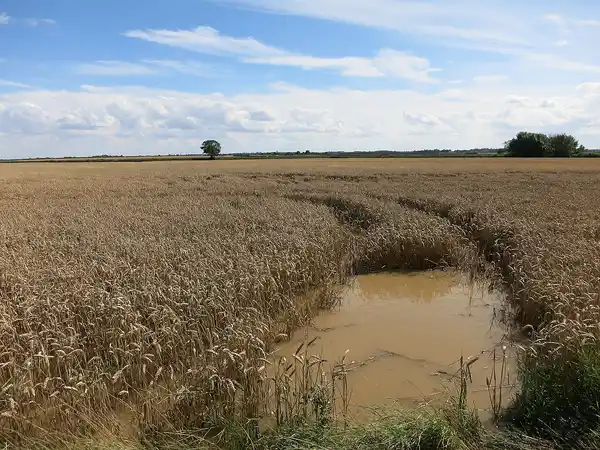
Notice the pattern at the top of this section: sodden, waterlogged, soggy, inundated, deluged — the strongest ground words are all complaints. That is the secret shape of the whole wet ladder: Level 1 can be pleasant (moist, dewy), but by Level 4, wetness has almost always become a problem.
Fancy Words for Wet: Sound Impressive, Carefully
Five words in this article double as the “fancy” shelf — the ones that make writing sound educated when they are used exactly, and overdone when they are not: saturated, sodden, inundated, deluged, and awash. For the complete standard list, the reference is Merriam-Webster’s thesaurus entry for wet, which groups the same family of words.
How to use the fancy shelf well:
- Saturated is your pick in science, gardening, and photography-adjacent writing: saturated soil, a saturated sponge. Precise beats fancy here — it says “at maximum capacity,” and that exactness is the elegance.
- Sodden is a storyteller’s word. It is heavy and a little old-fashioned, and it paints a picture (sodden boots, sodden letters) that soaked cannot. Use it in narrative, not in a lab report.
- Inundated and deluged belong to news and formal reports. In casual conversation they sound like a press release: say flooded instead.
- Awash is the poet’s shortcut — one syllable of elegance. “Streets awash with rain” is lovely; “my socks are awash” is a joke you did not mean to make.
The general rule: a fancy word impresses only when it is more accurate than the plain one. If soaked says it exactly, soaked wins.
Common Mistakes and Student Tips
Mistake 1: “A damp cake.” You have just insulted the baker. Cake you are praising is moist; damp is for walls and towels. Run the welcome test: wanted water = moist, unwanted water = damp.
Mistake 2: “Very saturated” or “very flooded.” Saturated and flooded are already end-points — something at maximum cannot be “very maximum.” Drop the very: “The soil was saturated.” Same logic applies to sopping wet, which is already a complete superlative phrase.
Mistake 3: “Soaked wet.” Soaked already contains the wetness. “I got soaked” is the full sentence; adding “wet” is like saying “wet with water.” (You will hear “soaking wet” — that one is fine, because soaking works as an intensifier in that fixed phrase.)
Mistake 4: Using soggy for people. Soggy describes texture — food, paper, soil, cardboard. A wet person is soaked, drenched, or bedraggled. Calling a person soggy sounds like you are comparing them to a wet biscuit.
Mistake 5: Using bedraggled for objects. Bedraggled is about a living creature’s messy appearance. A bedraggled banner is possible in poetry, but in everyday writing, save it for people, hair, dogs, and cats.
Student tip — learn the ladder, not the list. If you memorize one line, make it this one: damp → soaked → drenched → sopping wet. That single chain covers most real-life situations, from a towel that is not quite dry to a hiker in a downpour. Add soggy for food and ground, and moist for cake, and you can handle nearly any wet sentence in English.
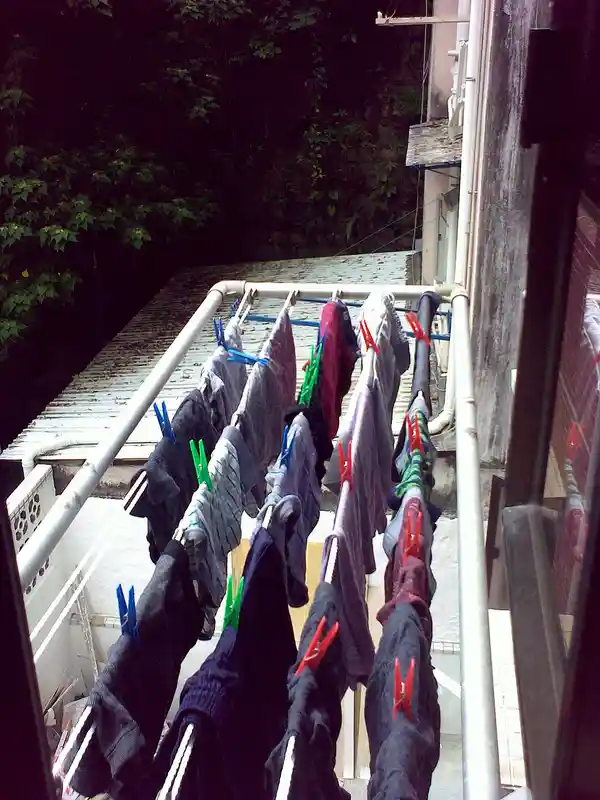
One last laundry note, because it ties the whole ladder together: clothes come off the line in three states — still wringing wet if the wash just ended, damp if they need another hour, and dry if the sun did its work. If you can hear that difference, your wet vocabulary is working.
Antonyms: The Dry Ladder
Every wet word makes more sense next to its opposite. English dries out on its own ladder, from “not wet” to “drier than dust”:
- Dry — the plain opposite of wet; no water, nothing more claimed. “The towels are finally dry.”
- Parched — dry and thirsty; used for throats, lips, and land that needs rain. “The parched field waited for the storm.”
- Bone-dry — completely, totally dry, with a satisfying snap to it. “By August, the creek bed was bone-dry.”
- Arid — dry as a climate: arid regions, arid deserts, land where rain is rare. Arid describes places and weather patterns, not objects.
- Desiccated — the fancy, scientific top of the dry ladder: dried out completely, every trace of moisture removed. “Desiccated coconut” is the food-label use; scientists use it for specimens.
Notice that the dry ladder mirrors the wet one: a plain word (dry/wet), a mid-ladder word with feeling (parched/sodden), and a formal closer (desiccated/saturated). Learn them in pairs and both ladders stick.
FAQ: Synonyms for Very Wet
How do you say “very wet”?
The most natural one-word answers are soaked and drenched. Use soaked when the water has gone into something — clothes, shoes, a bag — and drenched when water poured over it, usually rain. If it is dripping, say sopping wet. For ground and places, use waterlogged or flooded.
What is a word for extremely wet?
Sopping wet is the everyday champion; saturated is the precise version (holding all the water it can); sodden adds the idea that the wetness has ruined the thing. For places hit by rushing water, the strongest words are inundated and deluged.
What are some fancy words for “wet”?
Saturated, sodden, inundated, deluged, and awash. Each has a home: saturated in science and gardening, sodden in storytelling, inundated and deluged in news reports, and awash in descriptive writing. A fancy word only helps when it is also the most accurate word.
How do you say “wet” without saying “wet”?
Match the amount of water. A little: damp (unwanted) or moist (wanted). A lot: soaked or drenched. Dripping: sopping wet. Ground and places: soggy, waterlogged, or flooded. That five-second check — how much water, and do I want it there? — will pick the right word almost every time.
What is a slang term for “wet”?
In everyday slang about rain and water, people say sopping (“I’m sopping!”), drenched to the bone, and like a drowned rat for someone who looks completely soaked. These are playful, spoken expressions — perfect for conversation and storytelling, out of place in formal writing.
What are some synonyms for “fully wet”?
Saturated is the technical answer — fully wet means holding the maximum possible water. In everyday English, soaked through, sopping wet, and dripping wet say the same thing with more color. If the fully wet thing is land or a room, the word is flooded.
The Bottom Line
“Very wet” is not wrong — it is just a missed opportunity. English gives you a ladder: damp and moist for a whisper of water, soaked and drenched for wet-through clothes and people, sopping wet for the dripping maximum, and soggy, waterlogged, and flooded for ground that has given up. Learn which rung you are standing on, and you will never write “very wet” again — unless the rain is so bad that even the ladder feels damp.

SynonymsKey helps students and writers find the right word, with synonyms grouped by meaning, antonyms, and clear examples for everyday writing.