
“Very ugly” is the phrase writers reach for when a place stops them in their tracks — the hotel room that made them wince, the office block that ruins a street, the chair that clashes with everything around it. The problem is that “very ugly” tells the reader almost nothing. Ugly how? Falling apart, badly designed, drowned in clashing color, or just plain miserable to look at on a gray morning? English has a precise word for each of those jobs, and most of them are far stronger than “very ugly” because they explain why the thing looks bad.
One promise before we start: every word on this page describes places, things, objects, and situations — not people. You will find words for ugly buildings, rooms, furniture, designs, weather, and messes. You will not find words for anyone’s face or body, because that is a different job and this page refuses to do it. If you need to describe a building that hurts to look at, a room you would not sit in, or a design that went badly wrong, you are in the right place.
This guide arranges 28 synonyms for very ugly on a strength ladder — Level 1 for mild, Level 2 for clear, Level 3 for strong, plus a reserved top level for the worst messes — and groups them by the job they do, so you can pick the word that matches the scene in front of you.
Quick answer: the best synonyms for very ugly
In a hurry? Start here:
- For a building or place that is simply hard to look at: unsightly, drab, run-down
- For something old and falling apart: dilapidated, derelict-looking, squalid
- For a design that clashes or looks wrong: garish, clunky, misshapen
- For the strongest everyday word: hideous
- For a formal, advanced word: grotesque, unsightly, misshapen
- The noun to know: an eyesore — “the tower is an eyesore” (it is a noun, not an adjective; more on that below)
The very ugly ladder at a glance
| Word | Level | Best for | Example |
|---|---|---|---|
| plain | 1 | objects, design | a plain gray box of a building |
| unattractive | 1 | anything visual | an unattractive color scheme |
| unappealing | 1 | rooms, design, food presentation | an unappealing waiting room |
| drab | 1 | buildings, rooms | a drab concrete office block |
| dingy | 1 | rooms, interiors | a dingy motel room |
| dreary | 1 | places, views, weather | a dreary industrial suburb |
| unsightly | 2 | buildings, objects | an unsightly scar of a parking lot |
| run-down | 2 | buildings, neighborhoods | a run-down shopping strip |
| dilapidated | 2 | old buildings, vehicles | a dilapidated farmhouse |
| squalid | 2 | rooms, living spaces | a squalid basement apartment |
| grimy | 2 | surfaces, interiors | grimy windows and walls |
| clunky | 2 | objects, design, tech | a clunky old laptop |
| shapeless | 2 | objects, clothing, furniture | a shapeless gray sofa |
| misshapen | 2 | objects, structures | a misshapen clay pot |
| lopsided | 2 | objects, structures | a lopsided garden shed |
| garish | 3 | color, design, decoration | garish neon signage |
| deformed | 3 | objects, structures | a deformed plastic chair |
| hideous | 3 | buildings, objects, design | a hideous concrete tower |
| grotesque | 3 | design, structures, scenes | a grotesque concrete statue |
| monstrous | 3 | huge buildings, structures | a monstrous warehouse on the hill |
| bleak | 2–3 | landscapes, scenes | a bleak stretch of empty lots |
| grim | 2–3 | places, scenes, situations | a grim bus station at night |
| foul | 3 | weather, smells, situations | foul weather all weekend |
| nasty | 2–3 | messes, weather, situations | a nasty stain on the carpet |
| dreadful | 3 | design, weather, situations | a dreadful shade of green |
| ghastly | 3 | scenes, messes, colors | a ghastly mess in the kitchen |
| repulsive | top | messes, smells, scenes | a repulsive pile of rotting trash |
| revolting | top | messes, smells, food | a revolting smell from the drain |
Words for ugly buildings and places
Most “very ugly” searches are really about places — a building, a street, a room. This ladder climbs from “not much to look at” to “genuinely hard to stand in front of.”
Level 1: dull and lifeless
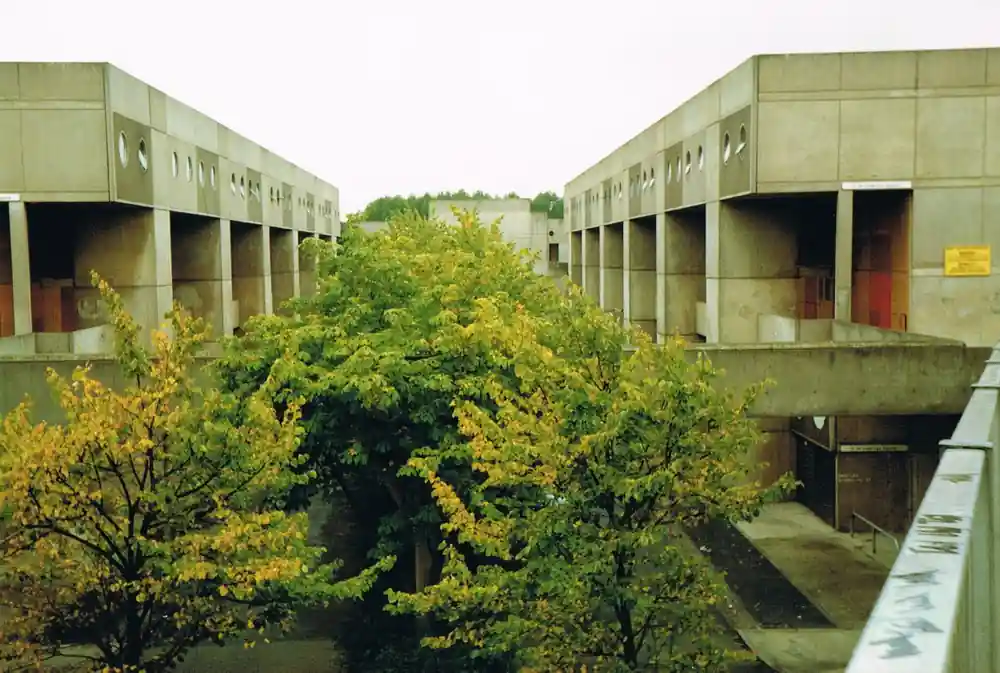
Drab — dull, faded, and lifeless in color. Drab is the word for a place that is not damaged, just depressingly plain. The office was a drab concrete block with tiny windows and no sign of life. Drab pairs naturally with gray, brown, and beige — the colors of places nobody tried to make pleasant.
Dingy — dark, dirty-looking, and poorly lit. Dingy belongs indoors: it describes rooms that feel grubby even before you touch anything. They were shown to a dingy motel room with yellowed curtains and a buzzing light. If the problem is light and grime rather than design, dingy is your word.
Dreary — gloomy and boring to look at, often because of weather or repetition. Row after row of identical houses made it a dreary street to walk down. Dreary carries a mood with it: a dreary place makes the day feel longer. For the light-and-dark side of gloomy places, see our guide to synonyms for very dark, which covers the same streets after sunset.
Level 2: neglected and falling apart
Unsightly — unpleasant to look at, often because something sticks out or does not belong. Unsightly is the most useful Level 2 word and one of the most formal on this page; planners, reporters, and councils use it because it sounds measured rather than emotional. Residents complained about the unsightly pile of rubble left beside the road.
Run-down — in poor condition because nobody has maintained it. Run-down says nothing about the original design; a beautiful building can become run-down. The once-grand hotel stood run-down and empty, its paint peeling in long strips. Run-down and dilapidated (next) are close partners: both love old buildings, which is why this page pairs with our guide to synonyms for very old — old explains the years, run-down explains the neglect.
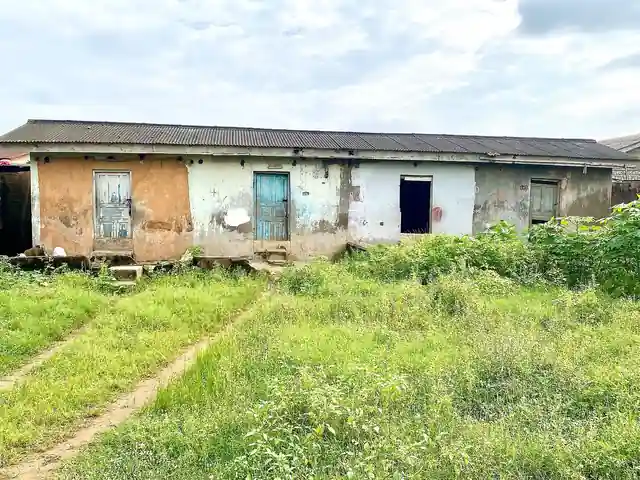
Dilapidated — falling apart through age and neglect: broken windows, sagging roofs, cracked walls. A dilapidated farmhouse leaned at the edge of the field, half its roof tiles missing. Dilapidated is stronger than run-down because the damage is structural and visible at a glance.
Squalid — dirty, neglected, and unpleasant in a way that suggests poverty or abandonment. Squalid is almost always used for living spaces, and it carries moral weight, so use it when the conditions genuinely deserve criticism. Inspectors described the basement flat as squalid, with damp walls and no working heat.
Grimy — covered in ingrained dirt. Where dingy is about light, grimy is about surfaces you can almost feel. The café had grimy windows, sticky tables, and a floor that had not been mopped in weeks.
Level 3: hard to look at
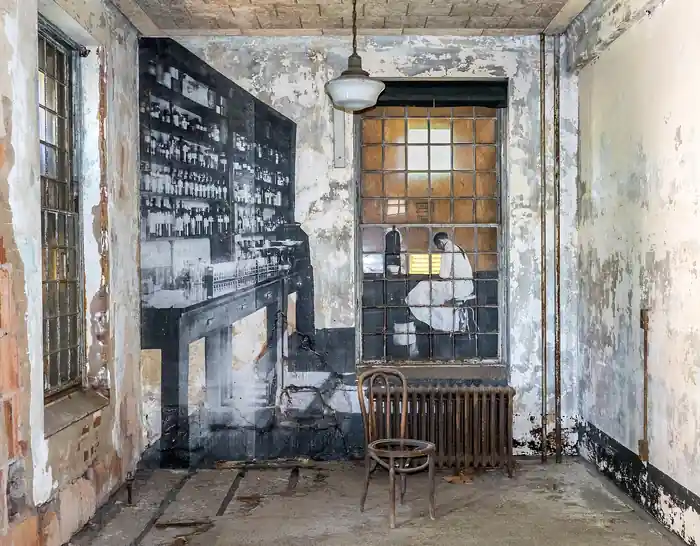
Hideous — extremely ugly, the strongest everyday word on this ladder. Hideous is the word people actually say out loud about buildings and designs, and it is strong without sounding formal. The new tower is hideous — forty stories of stained concrete looming over the old town.
Monstrous — ugly because of sheer size and shape; it suggests something huge that dominates its surroundings. A monstrous warehouse squatted on the hill above the village. Monstrous also appears in the idiom section below as a noun, a monstrosity.
Student mistake to avoid: “eyesore” is a noun.
Learners often write “an eyesore building.” English does not allow that. Eyesore is a noun meaning “a thing that is very ugly to look at,” so the building is an eyesore: The abandoned gas station is an eyesore at the entrance to the town. Use the adjectives from the ladder before a noun (“a hideous building”), and save eyesore for the noun slot.
Words for ugly objects and design
When the problem is not a place but a thing — a product, a logo, a piece of furniture, a color scheme — the vocabulary changes. These words attack shape, proportion, and taste rather than dirt or decay.
Level 1: simply not attractive
Plain — the gentlest word on this page. Plain means ordinary and undecorated; it can even be neutral in some contexts, so it is the safest choice when you want honesty without cruelty. It was a plain metal box with a door — functional, and nothing more. Note that plain also works as a deliberate understatement in design writing.
Unattractive — the general-purpose, neutral option. Unattractive fits almost any object or design and sounds factual rather than emotional, which makes it ideal for reviews and reports. The renovation left the lobby with an unattractive mix of marble, plastic, and chrome.
Unappealing — unattractive in a way that pushes people away; it is about the reaction, not just the look. Menus, packaging, and rooms are often unappealing. The dish arrived looking gray and unappealing under the kitchen lights.
Level 2: the shape is wrong
Clunky — heavy, awkward, and badly proportioned. Clunky is the go-to word for technology, furniture, and design that feels clumsy in the hand or the eye. The first version of the phone was clunky, with thick borders and a huge chin. If the object looks cheap as well as awkward, our guide to synonyms for very cheap covers the “cheap-looking” family, including tacky.
Shapeless — lacking any clear or pleasing form. She donated the shapeless gray sofa that had slumped in the corner for years. Shapeless is descriptive rather than angry — the thing is not offensive, it just has no shape worth looking at.
Misshapen — having a form that went wrong: bent, warped, or uneven when it should have been regular. The misshapen pot wobbled on the shelf, its rim dipping on one side. Misshapen is also one of the fancy words below — it sounds more advanced than “wrong-shaped” ever will.
Lopsided — uneven, with one side bigger, higher, or heavier than the other. The lopsided shed leaned toward the fence, one wall a full foot taller than its partner. Lopsided is highly visual and slightly playful, so it suits light criticism.
Level 3: clashing, warped, and over the top
Garish — ugly because the colors are too bright, too many, or badly clashed. Garish is the precise word when color is the crime: The lobby was painted in garish shades of orange and purple that fought each other under the fluorescent lights. Nothing is broken in a garish room — it is the taste that failed.

Deformed — spoiled in shape, twisted out of its proper form. Deformed is stronger and more clinical than misshapen; save it for damage, heat, pressure, or manufacturing failure. The deformed plastic chair had melted against the radiator and set in a sagging curve. Because deformed is used medically for bodies, keep it firmly attached to objects, exactly as in that example.
Grotesque — ugly in a strange, distorted, almost fantastic way. Grotesque goes beyond plain bad taste: a grotesque object looks wrong in a way that fascinates and repels at the same time. A grotesque concrete statue, all bulging eyes and twisted limbs, guarded the entrance to the theme park. This is also the key word for the FAQ question about things that are “ugly but beautiful” — grotesque design can be compelling precisely because it is so extreme.
Words for ugly scenes, weather, and situations
Sometimes nothing is broken or badly designed — the whole scene is just miserable. These words describe views, skies, and circumstances rather than single objects.
Bleak — bare, cold, and without hope or comfort. Bleak landscapes have no color and no shelter: Beyond the town stretched a bleak plain of cracked earth and dead grass. Bleak is stronger than dreary and carries an emotional chill.
Grim — stern, dark, and forbidding. Grim places feel unwelcoming rather than merely dull. It was a grim station: low ceilings, flickering lights, and not a single bench free of grime.

Foul — the classic word for weather that is wet, windy, and hostile at once. The ferry stayed in port through three days of foul weather. Foul also works for smells and situations (a foul mess in the hold), but foul weather is its home ground. When the ugliness is about low quality in general rather than looks, our broader guide to synonyms for bad may serve you better.
Nasty — unpleasant in a small-scale, everyday way: a nasty stain, a nasty patch of ice, a nasty surprise in the inbox. Nasty is informal and versatile, the word you would actually say to a friend.
Dreadful — very bad and unpleasant, with a slightly formal, British-leaning flavor that American writers still use for emphasis. Whoever chose that dreadful shade of green for the hospital corridor has a lot to answer for. Dreadful works for design, weather, and situations alike.
Ghastly — shockingly unpleasant, with a hint of horror. Its classic modern use is for messes and scenes: After the party, the kitchen was a ghastly mess of spilled drinks and broken glass. Ghastly can also describe colors that look sickly — a ghastly shade of yellow-green.
The strongest level: repulsive and revolting
At the top of the ladder sit two words you should reach for rarely:
Repulsive — causing a physical feeling of disgust. Reserve it for messes, smells, and scenes that turn the stomach: A repulsive pile of rotting trash had built up behind the market.
Revolting — equally strong, slightly more informal and emotional: A revolting smell rose from the blocked drain.
Register warning. These two words end conversations. If you call a building repulsive in a review, you are saying it is beyond criticism and into disgust — readers will feel attacked if the word is not earned. In nine cases out of ten, hideous, squalid, or grotesque says what you mean with more precision and less drama. Strong writers climb the ladder one rung at a time.
Idioms for ugly places and things
- An eyesore — the everyday noun for a building or object that spoils its surroundings. The half-finished tower has been an eyesore for a decade.
- A blot on the landscape — an idiom for a structure that ruins an otherwise attractive view. The power station is a blot on the landscape of an otherwise beautiful valley.
- A monstrosity — a noun for something huge and hideously ugly, usually a building. Critics called the new headquarters a glass-and-steel monstrosity.
All three idioms describe things and places — which keeps them safely inside this page’s promise.
Fancy words for very ugly
When you want the advanced, formal register — essays, reviews, exams — these are the upgrades:
- Grotesque — the single best fancy answer: distorted, strange, and ugly in a way that draws the eye.
- Unsightly — the professional’s word; measured, formal, at home in reports and planning documents.
- Misshapen — precise and literate for objects whose form went wrong.
- Squalid — formal and morally weighted, for living conditions and interiors.
- Dilapidated — the classic advanced word for a building ruined by age and neglect.
For comparison, the Merriam-Webster Thesaurus entry for “ugly” lists these words alongside more general synonyms, but without the levels, jobs, and warnings that help you choose between them.
For students: using these words well
Mistake 1 — “an eyesore building.” As the box above explains, eyesore is a noun. Write “The building is an eyesore” or “a hideous building,” never “an eyesore building.”
Mistake 2 — climbing too high, too fast. Beginners reach for repulsive and hideous for everything. If a room is only dull, drab or dingy is more accurate — and accuracy is what makes writing sound advanced.
Mistake 3 — using homely for objects. In American English, homely usually criticizes a person’s appearance, which is exactly the territory this page avoids; in British English it can mean cozy and homelike. That confusion is reason enough to leave it out and choose plain or drab instead.
Practice — upgrade “very ugly” three ways:
- “The station was very ugly.” → “The station was a dingy, low-ceilinged box with grimy windows.” (The problem was dirt and light.)
- “The new building is very ugly.” → “The new building is a hideous concrete tower, and residents call it an eyesore.” (The problem is the design itself.)
- “The colors of the room were very ugly.” → “The room was painted in garish orange and purple that clashed under the lights.” (The problem is color.)
Antonyms: the beautiful ladder
Every ugly word on this page has its opposite on the beautiful ladder: attractive → beautiful → stunning → gorgeous. A drab block becomes attractive with light and paint; a beautiful building pleases everyone; a stunning one stops traffic; a gorgeous one is rich and sumptuous. For the full ladder with meanings, levels, and examples, read our antonym partner guide to synonyms for beautiful — and when you describe the same street before and after a renovation, you now have both ends of the scale.
FAQ
What is a word for extremely ugly?
Hideous is the standard answer — it is the strongest everyday adjective for a building, object, or design. Grotesque is the choice when the thing is not just ugly but distorted and strange, and monstrous when sheer size is part of the problem.
What is a fancier way to say “ugly”?
Unsightly is the most formal, report-friendly option. Grotesque and misshapen sound literary, while squalid and dilapidated are the advanced choices for neglected interiors and buildings.
What is a harsh word for “ugly”?
Repulsive and revolting are the harshest words on this page, but they describe messes, smells, and scenes that cause disgust — use them sparingly. For a building or design, hideous delivers the harsh verdict without tipping into disgust.
What is the word for “ugly but beautiful”?
For places and things, that word is often grotesque: a grotesque building or design is distorted and ugly, yet so striking that people cannot stop looking at it. Brutalist concrete estates and bizarre statues collect admirers for exactly this reason — they are fascinating because they are extreme.
How do you say “ugly” elegantly?
Climb down the ladder and name the specific problem. Instead of “the ugly office,” an elegant writer chooses unsightly for a report, drab for a dull facade, or unappealing for a design that simply fails to attract. Specific and mild beats general and loud.
What is a fancy word for “hideous”?
Grotesque is the closest fancy equivalent, with a more literary, distorted flavor. Monstrous competes when the hideous thing is also enormous.
What is the slang word for an ugly place or thing?
In everyday speech, the go-to is the noun eyesore — “that tower is a real eyesore” — and a run-down place is often called a dump: “The old motel is a dump.” Both stay safely on the places-and-things side of the line.
How do you say “ugly” respectfully?
Choose the mildest accurate word from Level 1 — plain, unattractive, or unappealing — and, where you can, name the fixable problem (the color, the lighting, the upkeep) rather than the whole object. One honest note: this page deliberately covers words for places and things, not people; for people, the respectful choice is usually not to grade appearance at all.

SynonymsKey helps students and writers find the right word, with synonyms grouped by meaning, antonyms, and clear examples for everyday writing.