

A manager walks into a crisis meeting where a launch has just failed, a client is waiting on the phone, and half the room is already talking over the other half. She sets down her coffee, speaks quietly, and within two minutes everyone is working the problem instead of arguing about it. Later, someone describes her as “very calm” — and the phrase completely undersells what just happened. She was not merely calm. She was composed under pressure, and English has a far better word for it.
That is the trouble with “very calm.” The phrase is asked to cover a manager in a crisis, a nurse on a busy ward, a lake without a ripple, and a warm evening with no wind — four different jobs, one vague phrase. Worse, most word lists stir those jobs together: a calm sea, a calm temperament, and calm weather all land in the same flat table, as if the words were interchangeable. They are not. The word you want for a person holding steady in an emergency is wrong for a harbor at dawn, and both are wrong for the colleague whose flat, unreadable reaction left the whole room uneasy.
This guide separates the jobs and ranks the words. The main ladder covers calm people — from everyday relaxed to the unshakeable top — followed by a short group for calm places, weather, and water. And like every honest ladder, this one has a warning end: past a certain point, “more calm” stops being praise. A speaker can be so calm that the audience calls her dull, and a reply can be so calm that it reads as not caring at all. Knowing where that turn happens is most of what this article teaches.

Quick Answer: The Best Synonyms for Very Calm
If you only need one replacement right now, start here:
- Composed — the all-purpose upgrade for a person under pressure: “The pilot stayed composed and talked the passengers through the delay.”
- Serene — deep, quiet calm, the strongest everyday praise word: “She gave a serene smile and answered the question slowly.”
- Unflappable — calm that nothing seems able to shake: “Unflappable under questioning, he checked his notes and replied.”
- Tranquil — the best word for places and scenes: “They spent the evening in a tranquil harbor town.”
- Relaxed — the mild, everyday level: “He sounded relaxed about the results, win or lose.”
For the full picture — which level each word sits on, when a word turns into a complaint, and which words belong to water instead of people — use the ladder below.
The Very Calm Ladder at a Glance
Think of calm in a person as a scale of steadiness, from Level 1 to Level 4 — plus one warning zone past the top. Level 1 means nothing is pressing and the person is simply at ease. Level 2 means pressure arrived and the person held steady anyway. Level 3 is deep calm, the kind other people notice and remark on. Level 4 is the unshakeable far end, where calm survives genuinely bad news. And past Level 4, the ladder turns: the words stop describing strength and start describing someone who seems switched off.
| Word | Strength | Best for | Quick example |
|---|---|---|---|
| Relaxed | 1 | Everyday ease, no pressure | A relaxed weekend pace. |
| At ease | 1 | Comfort in a situation | At ease with new colleagues. |
| Easygoing | 1 | Temperament, hard to annoy | An easygoing team lead. |
| Mellow | 1 | Softened, gentle moods | A mellow evening mood. |
| Laid-back | 1 | Informal, unbothered style | A laid-back approach to deadlines. |
| Composed | 2 | Steady under pressure | Composed during the outage. |
| Collected | 2 | Recovered, gathered self-control | Calm and collected at the podium. |
| Poised | 2 | Graceful readiness to respond | Poised before the interview. |
| Level-headed | 2 | Clear thinking in a problem | A level-headed decision. |
| Even-tempered | 2 | A steady mood over time | Even-tempered with difficult clients. |
| Serene | 3 | Deep, quiet, visible calm | A serene expression. |
| Tranquil | 3 | People, places, scenes | A tranquil morning. |
| Placid | 3 | Naturally untroubled nature | A placid baby. |
| Unruffled | 3 | Unbothered by a disturbance | Unruffled by the criticism. |
| Unperturbed | 3 | Untouched by worrying news | Unperturbed by the delay. |
| Unflappable | 4 | Calm nothing seems to shake | Unflappable in a crisis. |
| Imperturbable | 4 | Formal, absolute steadiness | An imperturbable judge. |
| Equanimous | 4 | Even balance in praise and blame | Equanimous after the verdict. |
| Stoic | 4 | Enduring hardship without complaint | Stoic through the recovery. |
| Sedate | Too calm | Dull, slow, overly subdued | A sedate little town. |
| Stolid | Too calm | Unemotional to a fault | A stolid silence. |
| Impassive | Too calm | A face that shows nothing | An impassive stare. |
Keep the shape of this scale in mind as you read: the higher you climb, the more pressure the word implies the calm has survived. Calm with nothing testing it is only Level 1, no matter how pleasant it feels.
Level 1: Everyday Ease — Relaxed, At Ease, Easygoing, Mellow, Laid-Back
Level 1 words describe calm when nothing is going wrong. Nobody is being tested here; these words praise an absence of tension, and they are the right choice for weekends, temperaments, and friendly rooms.
Relaxed — free of tension in body and mind; the plain, everyday word. Example: After the exams ended, the house felt relaxed for the first time in weeks. Relaxed is the safest Level 1 word in both speech and writing, and the one to choose when you want no extra flavor at all.
At ease — comfortable and unembarrassed in a situation or with other people. Example: The new intern was at ease with clients within a week. Note that at ease describes comfort in a setting, not steadiness under attack — a person can be at ease at dinner and rattled in an emergency.
Easygoing — relaxed in temperament and hard to annoy; slow to take offense. Example: An easygoing supervisor, she treated the scheduling mix-up as a puzzle, not a scandal. Easygoing is a personality word, built for job references and descriptions of how someone generally is.
Mellow — softened and gentle, the way harshness fades with time, light, or mood. Example: By nine the party had turned mellow, all low music and long conversations. Mellow also describes flavors and sounds, which makes it the most flexible Level 1 word — and slightly informal everywhere it goes.
Laid-back — casually unbothered, taking things as they come. Example: His laid-back attitude toward travel plans drove his organized sister crazy. Laid-back is the informal member of this level: perfect for speech and friendly writing, risky in a formal report, where it can hint that someone is not taking the work seriously.
Level 2: Steady Composure — Composed, Collected, Poised, Self-Possessed, Level-Headed, Even-Tempered
Level 2 is where calm earns its reputation, because Level 2 calm is calm under load. Something has gone wrong, or is about to be judged, and the person stays clear and usable. Most of the time a writer reaches for “very calm,” Level 2 is the level they actually mean.
Composed — in control of your feelings and behavior while under pressure; the single best upgrade for “very calm” about a person. Example: The nurse stayed composed through the emergency admission and kept the family informed at every step. Composed implies an effort successfully made: the pressure was real, and it did not win.
Collected — having gathered yourself after a shock or a scare; calm that was recovered, not just kept. Example: She paused outside the courtroom, and by the time she entered she was collected again. Collected pairs with calm in the idiom calm and collected, and it always carries that small story of a wobble overcome.
Poised — calm and ready, balanced at the edge of action, with a hint of grace. Example: Poised at the microphone, the student waited for complete silence before beginning. Poised belongs to moments just before performance — interviews, speeches, negotiations — where calm is visible as readiness.
Self-possessed — sure of yourself and in full control, needing no rescue or reassurance. Example: Self-possessed beyond her years, the young manager answered the board’s questions without notes. This is the formal, slightly old-fashioned member of the level; in a novel it gleams, in an email it can sound stiff.
Level-headed — thinking clearly and practically when a problem hits; calm in the decisions, not just the face. Example: The level-headed engineer shut the system down first and debated causes second. Level-headed is the word performance reviews reach for, because it praises judgment, not just temperament.
Even-tempered — steady in mood across days and provocations; not easily tipped into irritation. Example: Even-tempered with difficult callers, he ended every shift without a raised voice. Where composed describes a moment, even-tempered describes a pattern — the long-exposure photograph of the same quality.
Notice what this level is for. Composed is the word people want when the word they feel is scared — before an interview, a results call, a difficult conversation. Nobody hopes to feel nothing; they hope to act steadily anyway. That gap between feeling and behavior is exactly what the ladder for synonyms for very scared measures from the other side.
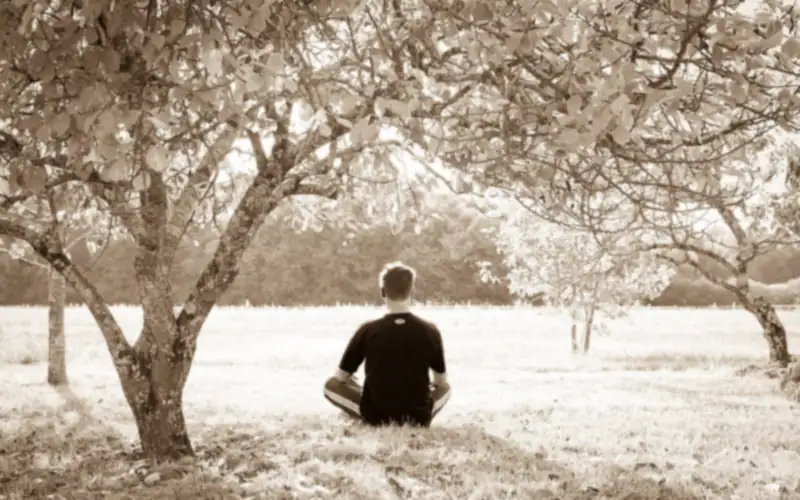
Level 3: Deep Calm — Serene, Tranquil, Placid, Unruffled, Unperturbed
Level 3 words describe calm so complete that it changes the atmosphere around the person. These are noticeably stronger than “very calm,” and most of them double as words for places — which is precisely why they feel deeper about people: they suggest a whole inner weather, not just a held temper.
Serene — deeply and visibly peaceful, untroubled in a way others can see. Example: The surgeon wore a serene expression that settled the whole waiting room. Serene is the strongest everyday praise word on this ladder — formal enough for a eulogy, natural enough for a text message. It is also the border where calm shades toward contentment: serene is peace with a quiet glow of satisfaction in it, while the words in our guide to synonyms for very happy name the brighter, more active feelings. Calm is low-arousal peace; happy is positive feeling — serene sits peacefully on the calm side of that line.
Tranquil — calm, quiet, and undisturbed; the great double-duty word for people and places. Example: He kept a tranquil voice even as the negotiations stretched past midnight. Tranquil is slightly more formal than serene and slightly more about the absence of disturbance — a tranquil mind, a tranquil garden, a tranquil sea crossing.
Placid — naturally calm and untroubled, rarely disturbed by anything. Example: The placid baby slept through the airport, the flight, and the taxi home. Here is the level’s one caution: about a person, placid can shade toward slow and dull — a placid employee may be praised for steadiness or quietly criticized for having no spark. Context decides, so use it where untroubled is clearly the point.
Unruffled — not disturbed or embarrassed by something that just happened. Example: Unruffled by the heckler, the professor finished her sentence and took the next question. Unruffled is the most reactive word on this level: it needs a ruffle that failed — criticism, an interruption, a surprise bill — and it praises the calm that followed it.
Unperturbed — not worried or upset by news that might have worried anyone. Example: Unperturbed by the audit announcement, the accountant opened the filing cabinet and smiled. Unperturbed is unruffled’s more formal twin, aimed at concerns rather than disruptions: delays, rumors, warnings. In casual speech it can sound dry, even slightly amused — which is sometimes exactly the tone wanted.
Level 4: Unshakeable — Unflappable, Imperturbable, Equanimous, Stoic
Level 4 is the fancy top of the ladder: calm that survives the things that break Level 2. These words are rarer, more formal, and more absolute — use them when the steadiness itself is remarkable, or they will sound inflated.
Unflappable — so calm that nothing seems able to upset or confuse you; the famous answer to “what do you call someone who stays calm under pressure?” Example: The unflappable air traffic controller worked two emergency landings in one hour without raising her voice. Unflappable is admiring and slightly informal — the word of profiles, sports pages, and office legend.
Imperturbable — incapable of being disturbed; the formal, absolute version of unflappable. Example: Imperturbable through three recounts, the election official read each result in the same even tone. This is a true fancy word: Latin-built, five syllables, and worth every one when the calm is total. In casual writing it can feel like a deliberate flourish — sometimes that is the point.
Equanimous — keeping an even mental balance through praise and blame, success and failure alike. Example: Equanimous after both the award and the criticism that followed it, she went back to work the same afternoon. Equanimous names a philosophy of calm, not just a moment of it — the word comes from the idea of an equal, level mind, and it suits people whose steadiness does not depend on how the day is going.
Stoic — enduring pain, loss, or hardship without complaint or visible distress. Example: Stoic through the long recovery, he did his exercises daily and mentioned the pain only when asked directly. Stoic is the level’s caution word: it praises endurance, but it can also imply feelings suppressed rather than absent. Call a grieving friend stoic and you may be complimenting strength or quietly noting that he never let anyone in — the word holds both, so aim it carefully.
Too Calm: When the Ladder Turns — Sedate, Stolid, Impassive, Dispassionate
Every ladder on this site turns, and the calm ladder turns in a distinctive way: the words past the top do not describe danger, they describe absence — of energy, of reaction, of visible feeling. A person, place, or reply can be so calm that the calm itself becomes the complaint.
Sedate — calm to the point of being dull, slow, and overly subdued. Example: The sedate resort town rolled up its sidewalks by nine. About a person, sedate suggests low energy rather than strength; about a pace or a town, it is the polite word for boring. Nobody has ever bragged about a sedate party.
Stolid — so calm and unemotional that it reads as unfeeling or slow to respond. Example: Asked about the canceled project, he gave a stolid shrug and said nothing at all. Stolid is the turn at its sharpest: the face that never changes stops looking strong and starts looking like it does not care. Use it when that is genuinely your meaning — it is never a compliment.
Impassive — showing no emotion at all; a face and voice that give nothing away. Example: The defendant sat impassive while the verdict was read. Impassive is neutral in a poker report and chilling in a human story: the calm is total, and that totality is the problem. It describes the surface, and quietly asks what, if anything, is underneath.
Dispassionate — calm because detached; not influenced by emotion. Example: A dispassionate review of the data showed the launch had failed on price, not quality. Dispassionate is the one turn word with an honorable use: judges, scientists, and auditors are supposed to be dispassionate. About a friend’s reaction to your news, though, the same word lands as cold. The ladder turns, but it turns by audience — know which side of it your sentence stands on.
The lesson of this section is simple: if your sentence is praise, stop at serene or unflappable. If you climb past them, you are no longer saying the calm was impressive — you are saying it was too much.
Calm Places, Weather & Water: Still, Windless, Glassy, Restful, Halcyon, Balmy
People hold the main ladder, but half the searches for this word family are really about scenes: a harbor, a night, a stretch of water. These six words do that job, and most of them sound wrong about a person — which is exactly why they needed their own group.
Still — with no movement and no wind; the plain, perfect word for air and water. Example: The lake was perfectly still at dawn, holding the mountains upside down. Still is the group workhorse: a still morning, still water, a still room.
Windless — the factual, weather-report word: simply, no wind. Example: They crossed the bay on a windless morning and never raised the sail. Windless promises nothing poetic — it reports a condition, and pairs naturally with still.
Glassy — smooth and still like glass, reflecting what stands over it; the finest word for water. Example: By six the sea had turned glassy, and the boats sat on their own reflections. Glassy water is where calm shakes hands with smoothness — the same mirror-still surface that tops the ladder in our guide to synonyms for very smooth.
Restful — calm in the way that lets people recover; the word for rooms, colors, and weekends. Example: She kept the guest room restful — plain walls, soft light, no television. A calm scene is often a quiet one too, and where the sound level is the real subject, the ladder in our guide to synonyms for very quiet takes over from here.
Halcyon — the poetic, fancy word of the group: calm, idyllic, and golden, almost always looking backward. Example: He spoke of the halcyon summers of his childhood, when the whole village swam in the river. Halcyon comes from a mythical bird said to calm the winter sea so it could nest on the water — which is why “halcyon days” means a remembered stretch of perfect calm, not next Tuesday’s forecast.
Balmy — warm, mild, and gently calm, the pleasant-weather word. Example: It was a balmy evening, warm enough for dinner on the porch. Balmy is about temperature as much as stillness: a balmy night can have a light breeze and still earn the word, as long as the air feels kind.

Calm Idioms: Cool as a Cucumber & Friends
Four idioms do most of the everyday work in this word family, and each one teaches something the ladder cannot.
Cool as a cucumber — completely calm and relaxed, especially in a situation that would rattle most people. Example: Two minutes before the biggest presentation of her career, she was cool as a cucumber, joking with the interns. Why a cucumber? The inside of a cucumber stays noticeably cooler than the air around it on a hot day — the idiom simply borrows that coolness for a person. It is affectionate, informal, and safest about people, never about weather.
Calm and collected — the fixed pair for recovered self-control: calm now, and gathered after whatever shook you. Example: The speech began badly, but within a minute she was calm and collected. Because collected already implies the recovery, this idiom suits second halves — of speeches, matches, and difficult days.
Keep your cool — to stay calm when provoked, where losing it is the live alternative. Example: He kept his cool through forty minutes of interruptions and still finished the report. Its partner, lose your cool, is what makes the idiom useful: it frames calm as something held on purpose, not a mood that happened to you.
The calm before the storm — a quiet period that everyone suspects will not last. Example: The office was silent the morning the layoffs were announced — the calm before the storm. This is the one idiom here that is not praise: it uses calm as a warning, and writers reach for it when the stillness itself feels like suspense.

Fancy & Poetic Words for Calm — and the Slang Question, Answered Honestly
Google’s question box asks this outright — “What is a fancy way to say calm?” and “What is a deeper word for calm?” — because writers sense that calm has a dressed-up shelf and want the key. Here it is, with honest labels.
The fancy shelf is the top of the ladder you already climbed: imperturbable for absolute, formal steadiness; equanimous for balance that survives praise and blame; serene when the calm should also glow a little; and halcyon when the calm is golden, past, and poetic. Each fancy word is fancy because it is specific — it names a kind of calm, not just a larger amount of it. That is the whole secret of the deeper words, too: the deeper word for calm is never a louder synonym, it is a narrower one. Composed names calm under pressure, tranquil names calm without disturbance, stoic names calm through pain.
One honest footnote belongs here. Sangfroid — borrowed from French, literally “cold blood” — is the word profiles reach for when someone stays icily composed in a crisis: “She handled the hostile takeover bid with sangfroid.” It is a fine word, but it is a noun, not an adjective, so it can never sit on this ladder: you have sangfroid, you are not sangfroid. Flagging that is what a ladder is for.
And the slang question — “What is a slang word for ‘calm’?” — deserves a straight answer rather than a padded one. The living slang here is chill: relaxed, unbothered, low-pressure, as in “a chill evening” or “he’s pretty chill about the move.” Chill is real, current, and strictly informal — perfect for speech and friendly writing, out of place in a report. Older slang like cool in this sense has faded into general approval (“that’s cool”) and no longer specifically means calm. A one-line answer is the honest one; a paragraph of invented slang would be filler.
Common Mistakes with “Calm”
Mistake 1: Using placid as automatic praise. Placid means untroubled by nature — lovely for a baby or a lake, double-edged for an employee, who may hear “no spark.” If you mean steady under pressure, composed is the word that cannot be misread.
Mistake 2: Mixing up serene and tranquil. They overlap, but serene leans toward a person’s visible peace, and tranquil toward an undisturbed state or scene. A serene host creates a tranquil evening; swapping them rarely breaks a sentence, but choosing well sharpens it.
Mistake 3: Calling every enduring person stoic. Stoic involves hardship carried without complaint — pain, grief, a long recovery. Using it for a colleague who is merely quiet in meetings inflates the word and misdescribes the colleague; even-tempered is the honest fit.
Mistake 4: Expecting a stronger word to do emotional work. No synonym on this ladder will make a nervous speaker calm, and this article makes no such promise — words describe states, they do not produce them. What the right word can do is describe the state accurately, which is why the ladder exists.
Mistake 5: Dragging in the verb senses. Calm down and calm a horse are verb jobs, with their own synonyms (soothe, settle, quiet). This article covers the adjective; one fence-off note is all the verb gets, because mixing the two is how flat word lists confuse learners in the first place.
Student tip — learn the ladder, not the list. If you memorize one line, make it this one: relaxed → composed → serene → unflappable → stolid. That chain covers an easy Sunday, a professional under pressure, deep visible peace, the unshakeable top — and the exact point where calm stops being a compliment. Add tranquil for places and glassy for water, and you can handle nearly any calm sentence in English.
Antonyms: The Agitation Ladder
Every calm word makes more sense next to its opposite, and English agitation climbs its own short ladder, in mirror image:
- Uneasy — the mild first step: not settled, faintly worried. “An uneasy quiet settled over the meeting.”
- Anxious — worried and on edge, with the mind running ahead to bad outcomes. “She grew anxious as the results took longer and longer.”
- Agitated — visibly restless and upset, unable to settle in body or voice. “The agitated caller paced the lobby, phone in hand.”
- Frantic — the wild top end: wild with worry or hurry, all control gone. “A frantic search through the station found the passport in the wrong bag.”
Watch the mirror: the agitation ladder also has a pole beyond it, where worry hardens into temper. Anger is the classic opposite of calm — the state where steadiness is not just lost but replaced — and its full ladder, from annoyed through furious to livid, lives in our guide to synonyms for very angry. Writers describing a scene often need both ladders at once: the unflappable manager on one side of the desk, the frantic client on the other, and the exact words for the distance between them.

FAQ: Synonyms for Very Calm
What is another word for “very calm”?
It depends on the job. For a person under pressure, composed or unflappable. For deep, visible peace, serene. For a place, a scene, or water, tranquil, still, or glassy. “Very calm” is really three questions wearing one coat — name the job first and the right word follows.
What do you call someone who stays calm under pressure?
Unflappable is the famous one-word answer, and composed is its everyday partner. If the calm was recovered after a scare, collected fits best; if it never wavers through praise or blame, the formal word is equanimous. The full set lives on Levels 2 and 4 of the ladder above.
What is a fancy word for calm?
Imperturbable for absolute steadiness, equanimous for balance under praise and blame, serene for calm with a quiet glow, and halcyon for golden, remembered calm in places and days gone by. Each is fancy because it is specific — it names a kind of calm, not just more of it.
What is the strongest word for calm?
For a person, imperturbable makes the strongest claim: incapable of being disturbed at all, with unflappable as its slightly more informal twin. But strength has an edge — push past them and the words turn: stolid and impassive describe calm so complete it reads as not caring. The strongest praise word is unflappable; the strongest word overall is one you would rarely want aimed at you.
What is a slang word for “calm”?
Chill — relaxed and unbothered, as in “a chill evening at home.” It is genuine, current slang, and strictly informal: right for conversation and friendly writing, wrong for reports and formal essays, where relaxed or composed does the same job safely.
What does “cool as a cucumber” mean?
It means completely calm and relaxed, especially under pressure that would rattle most people — “Cool as a cucumber, she retied her shoe at the start line while the crowd roared.” The image comes from the cucumber itself: its inside stays measurably cooler than the surrounding air on a hot day. The idiom is warm and informal, and it belongs to people, not weather.
Can someone be too calm?
Yes — that is the turn at the top of the ladder. Calm that costs energy and responsiveness becomes sedate (dull), stolid (apparently unfeeling), or impassive (giving nothing away). The words are still synonyms for very calm; what changed is the judgment. Knowing where praise stops is most of what vocabulary strength means.
For the complete dictionary treatment of the word family, the Merriam-Webster Thesaurus entry for “calm” — including its Synonym Chooser comparing calm, peaceful, placid, serene, and tranquil — lists the near and opposite meanings in full. This guide’s job has been the part a thesaurus cannot do: ranking them, splitting them by job, and marking where the praise ends.
The Bottom Line
“Very calm” is not wrong — it is just three jobs hiding inside one vague phrase. Learn the shape of it: relaxed and easygoing for calm with nothing testing it; composed and collected for calm that holds under pressure; serene and unruffled for deep, visible peace; unflappable and imperturbable for the unshakeable top — and the discipline to stop before stolid, where calm turns into a complaint. For scenes, keep tranquil, still, and glassy in a separate pocket. Pick the rung and the job, and you will never write “very calm” again.

SynonymsKey helps students and writers find the right word, with synonyms grouped by meaning, antonyms, and clear examples for everyday writing.