
The grocery line had not moved in ten minutes. The woman ahead of me had a cart full of coupons, the cashier was new, and the little red light above the register kept blinking for a manager who never came. I stood there with my milk getting warm and thought, “This is very slow.” And then I thought something else: that is the worst sentence I could write about it. “Very slow” says nothing. It does not tell you whether the line is crawling or frozen. It does not tell you whether I am annoyed or amused. It is a flat word with a louder word taped to it, and it still falls flat.
That is the problem with “very slow.” It is the word you reach for when you are too tired to reach for a better one. A download bar stuck at 3% is not “very slow” — it is stalled. A Sunday drive through the country is not “very slow” — it is leisurely. A project that has missed three deadlines is not “very slow” — it is behind schedule, or dragging, or glacial. Each of those words paints a different picture, and the right one makes your reader see exactly what you mean.
This guide fixes that. You will get a strength ladder that runs from a relaxed, unhurried pace all the way to a full standstill, plus the right word for every situation: movement, work, thinking, speech, and the fancy words for when you want to sound polished. Every word comes with a strength score, a plain meaning, and a real example sentence, so you can stop guessing and start choosing.

The Slow Scale: From Unhurried to Glacial
Slow is not one thing. It is a sliding scale, and each step on the scale has its own word. Before you grab the strongest word you know, find your place on this scale — because calling a relaxed Sunday drive “glacial” is as wrong as calling a frozen download “leisurely.”
Unhurried (2/10) — Not rushed, and not in any hurry to be. This is slow as a choice, and it sounds pleasant. Example: “We took an unhurried walk through the park, stopping whenever something caught our eye.”
Leisurely (3/10) — Slow in a relaxed, enjoyable way, like a vacation. A leisurely pace is one you chose. Example: “She ate a leisurely breakfast on the porch, in no hurry to start the day.”
Gradual (4/10) — Happening little by little over time, not all at once. The slow change you barely notice day to day. Example: “The gradual warming of the room made everyone drowsy by noon.”
Slow (5/10) — The middle of the scale. Moving, changing, or happening at a low speed. The word everything else is measured against. Example: “The slow bus stopped at every corner, and we were late again.”
Sluggish (6/10) — Slow and heavy, like something is dragging. A sluggish morning, a sluggish computer, a sluggish market. Example: “After lunch, the whole office felt sluggish, and nobody wanted to start the next meeting.”
Plodding (7/10) — Slow and steady, step by heavy step, like walking through mud. Plodding is workmanlike: it gets there, but it takes forever. Example: “The plodding pace of the investigation frustrated everyone waiting for answers.”
Lethargic (8/10) — Slow because there is no energy left. A lethargic person or animal moves like a battery running down. Example: “The lethargic dog would not even lift his head when the mail carrier arrived.”
Glacial (9/10) — So slow it feels like a glacier moving — which is to say, almost not moving at all. Example: “The glacial pace of the checkout line made shoppers abandon their carts.”
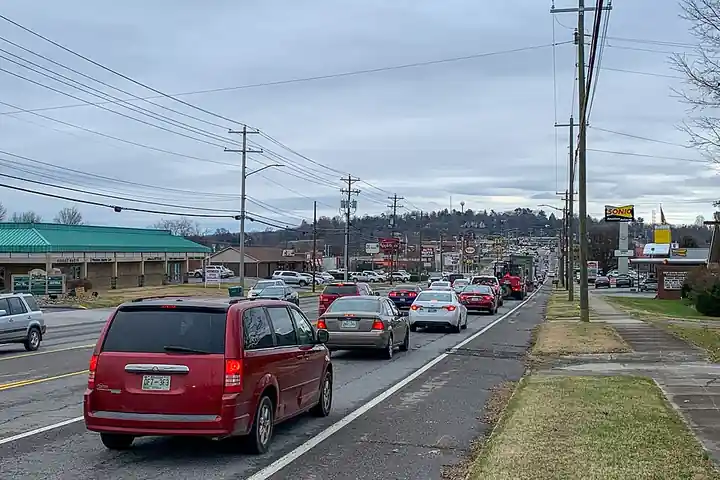
Snail-paced (10/10) — The top of the scale. As slow as a snail, the classic image of slowness itself. Example: “Traffic on the bridge was snail-paced, and the ten-minute drive took an hour.”
Keep this scale in your head while you read the rest of the guide. Every word below carries a strength score on the same scale, so you can compare them at a glance.
Gentle and Positive: Words for a Relaxed Pace
Not all slow is bad. Some slow is the whole point. A slow morning, a slow meal, a slow walk with someone you love — these are good things, and English has kind words for them. Use these when slow is a choice, not a problem.
Leisurely (3/10) — Relaxed and unhurried, with time to enjoy it. “Leisurely” is the warmest word on this list. It turns a slow pace into a luxury. Example: “We spent a leisurely afternoon reading on the porch while the rain came down.”
Unhurried (2/10) — Calm and without rush. An unhurried person is not late — they are simply not hurrying. It is a gentle word, and it works well in writing about travel, meals, and mornings. Example: “His unhurried way of speaking made everyone in the room relax.”
Relaxed (3/10) — Easy and without tension. A relaxed pace is one nobody is pushing. Example: “The relaxed pace of the small town was exactly what she needed after years in the city.”
Easygoing (3/10) — Casual and unhurried, usually about a person. An easygoing person does not rush, and does not make others rush either. Example: “Our easygoing guide let us stop for photos as often as we wanted.”
Deliberate (5/10) — Slow on purpose, because someone is thinking carefully. A deliberate decision is not a slow decision — it is a careful one, and the word carries respect. Example: “She gave a deliberate answer, weighing each word before she spoke.”
Measured (5/10) — Careful and controlled, like someone counting out each step. A measured response is calm, and a measured pace is steady. Example: “The measured way he walked through the museum told us he wanted to see everything.”
Here is the trick: when slow is good, say so with one of these words, and your reader will feel it. “We took a leisurely drive” sounds like a pleasant afternoon. “We took a very slow drive” sounds like a complaint. Same drive, different word, different feeling.
Slow Movement: Words for Things That Crawl
Sluggish (6/10) — Moving heavily, as if through thick air or water. Sluggish works for bodies, machines, and traffic. Example: “The sluggish elevator took a full minute to climb two floors.”
Plodding (7/10) — Heavy, steady steps, one after another. Plodding is the sound of boots in mud. Example: “The plodding hikers reached the summit at sunset, exhausted but proud.”
Creeping (7/10) — Moving very slowly and quietly, almost without being noticed. Traffic creeps. Prices creep up. A vine creeps along a wall. Example: “The line crept forward, one person at a time, and nobody complained out loud.”
Crawling (7/10) — Moving at a crawl, the slowest a car or a person can go while still moving. Example: “Traffic was crawling through the construction zone, and drivers had their windows down.”
Snail-paced (10/10) — As slow as a snail, the most familiar image in English for extreme slowness. Example: “The snail-paced checkout line stretched all the way to the back of the store.”
Turtle-like (6/10) — Slow in the steady, shelled way of a turtle. It is a gentle, slightly funny word, good for kids’ writing and casual speech. Example: “His turtle-like walk across the parking lot made his friends laugh.”
Languid (7/10) — Slow and graceful, like someone moving through warm water. Languid is beautiful and a little dreamy — it suits a hot afternoon, not a deadline. Example: “She stretched in a languid way, still half asleep, and reached for her coffee.”
If you need another word for a slow person in a sentence, the kind one is “unhurried” or “methodical.” If you need a word for slow-moving traffic or machinery, “sluggish” and “crawling” do the job. And if you need the classic image, the snail is waiting for you — it has been the symbol of slow for centuries, and it still works.

Slow Progress: Words for Work, Projects, and Change
This is where “very slow” does the most damage, because work is where people judge your words. A project is never just “very slow.” It is delayed, or stalled, or inching along, or behind schedule — and each of those words tells your boss something different. Here is how to say it right.
| Word | What it really means | Best for | Strength |
|---|---|---|---|
| Gradual | Happening little by little over time | Change, improvement, warming up | 4/10 |
| Incremental | Moving forward in small steps | Projects, updates, progress reports | 4/10 |
| Delayed | Late, held up, not on time | Schedules, deliveries, replies | 6/10 |
| Stalled | Stopped moving entirely, stuck | Projects, negotiations, vehicles | 7/10 |
| Behind schedule | Not where the plan said it would be | Work updates, honest status reports | 6/10 |
| Sluggish | Moving heavily, low energy | Markets, sales, mornings, computers | 6/10 |
| Snail-paced | Barely moving at all | Traffic, lines, approvals | 10/10 |
Gradual (4/10) — The safest word for slow change. A gradual improvement is real progress, just spread out. Example: “Her gradual recovery surprised the doctors, who had expected a much faster one.”
Incremental (4/10) — Progress in small steps, one at a time. This is a professional word, and managers love it because it sounds honest and controlled. Example: “We made incremental progress on the report, finishing two sections a week.”
Delayed (6/10) — Late. Something that should have happened already has not. Use it when a schedule slipped. Example: “The delayed shipment finally arrived on Friday, a week after we expected it.”
Stalled (7/10) — Stopped completely. A stalled project is not moving at all, and everyone knows it. Example: “The talks stalled on the question of price, and neither side would budge.”
Behind schedule (6/10) — The honest, professional way to say a project is very slow. It names the problem without blaming anyone. Example: “We are behind schedule on the launch, but the new date is realistic.”
Drag (verb, 6/10) — To move slowly because something is holding it back. “The meeting dragged on” is something everyone has felt. Example: “The afternoon dragged, and by four o’clock the whole office was watching the clock.”
If you are writing about very slow progress at work, pair the word with proof, the way the professional-writing guides teach: not “the project is very slow” but “the project is behind schedule — we have finished three of eight sections in six weeks.” The word opens the door; the detail walks through it. And if the whole team is moving slowly because everyone is worn out, our guide to synonyms for very tired has words for that side of the problem too.
Slow Thinking and Slow Speech
Sometimes the slow thing is not a car or a project. It is a person — someone who takes a long time to understand, or to answer, or to decide. This is the hardest place to find the right word, because the wrong one is an insult. Choose carefully.
Methodical (5/10) — Slow because someone is careful and thorough. This is the kindest professional word for a slow thinker. Example: “He is a methodical worker — slow to decide, but almost never wrong.”
Ponderous (7/10) — Slow and heavy, like a long speech that takes forever to get to the point. Ponderous can describe thinking or talking, and it is not a compliment. Example: “The ponderous lecture lost half the audience before the first break.”
Halting (6/10) — Stopping and starting, with pauses in between. Halting speech is slow because the speaker keeps getting stuck. Example: “In halting English, he explained what had happened to his car.”
Drawn-out (6/10) — Longer than it needs to be. A drawn-out meeting, a drawn-out goodbye, a drawn-out story. Example: “The drawn-out trial lasted eight months, and the jury looked exhausted.”
Slow on the uptake (6/10) — An idiom for someone who takes a while to understand something. It is gentle as idioms go, and it works in casual speech. Example: “He is a little slow on the uptake, but once he gets it, he never forgets it.”
Lethargic (8/10) — Slow because there is no energy. About a person, it can sound medical, so use it for temporary states (after lunch, after illness), not as a label. Example: “Lethargic after the long flight, she went straight to bed.”
The polite way to say someone is very slow is to describe the behavior, not the person: “He takes his time with decisions.” “She processes things carefully.” “He likes to think before he speaks.” All three are true, all three are kind, and none of them will hurt anyone’s feelings. Never call a person “dull,” “dense,” or “dim” unless you mean to insult them — those are not synonyms for slow, they are judgments, and they will be heard that way. And if you want the other side of the scale — the words for a quick mind — our guide to synonyms for very smart has the full ladder, from bright to genius.

Fancy Words: How to Sound Smart, Not Stiff
Sometimes you want a word that sounds impressive. These are the fancy words for slow — the ones that make an essay or a toast sound polished. Use them sparingly. One per paragraph is the limit.
Glacial (9/10) — The most useful fancy word on this list. It means as slow as a glacier, and everyone understands the image at once. Example: “The glacial pace of the permit process tested everyone’s patience.”
Languid (7/10) — Slow in a graceful, dreamy way. Languid suits summer afternoons, slow dances, and unhurried mornings. Example: “The languid afternoon stretched on, warm and quiet, and nobody wanted it to end.”
Ponderous (7/10) — Slow and heavy, with weight behind it. A ponderous speech, a ponderous book, a ponderous decision. Example: “His ponderous way of speaking made even simple news sound important.”
Deliberate (5/10) — Slow because it is careful, and proud of it. Deliberate is the fancy word that is also safe in professional writing. Example: “She took a deliberate approach to the problem, and her solution lasted.”
Languorous (8/10) — Like languid, but softer and more formal. It belongs in novels and essays, not in a text message. Example: “The languorous heat of August slowed the whole town to a walk.”
Torpid (8/10) — Slow like an animal in winter, barely moving, half asleep. It is a strong word, but it can sound like a medical diagnosis, so save it for writing, not for people you know. Example: “The torpid river moved so slowly you could barely tell which way it flowed.”
So what is a fancy way to say “slow”? Glacial is the safest — it sounds impressive in almost any setting. Languid is the prettiest, best for writing about afternoons and movement. Ponderous is the heaviest, best for speeches and books. And what is a fancy word for “slowly”? Leisurely is the friendly one, unhurriedly is the plain one, gradually is the precise one, and languidly is the one that sounds like poetry. Pick the one that fits the sentence, and then stop — one fancy word per paragraph, or the reader will hear the thesaurus instead of the thought.

Slow vs Gradual vs Sluggish: What Is the Difference?
These three words are the ones people mix up most, so here is the honest difference.
| Word | What it really means | Best for | Strength |
|---|---|---|---|
| Slow | Moving or happening at a low speed | Everyday use, any situation | 5/10 |
| Gradual | Happening little by little over time | Change, improvement, warming, cooling | 4/10 |
| Sluggish | Slow and heavy, low energy, dragging | Traffic, markets, mornings, machines | 6/10 |
| Glacial | So slow it feels frozen in place | Bureaucracy, lines, approvals, change | 9/10 |
Think of it this way. A slow bus is simply not fast. A gradual change is one you barely notice happening. A sluggish morning is one where your body will not wake up. A glacial process is one that feels like it will never finish.
The differences show up in real sentences:
- “The slow train stopped at every station.” — plain, factual, no feeling attached.
- “The gradual improvement in her health encouraged the whole family.” — positive, spread over time.
- “The sluggish market worried investors all spring.” — heavy, low energy, something wrong.
- “The glacial pace of the repairs meant the road stayed closed all summer.” — frustrating, almost frozen.
And when do you use glacial vs gradual? Use gradual when the change is real but spread out — a gradual recovery, a gradual warming, a gradual improvement. Use glacial when the change is so slow it feels like nothing is happening at all — a glacial bureaucracy, a glacial checkout line, a glacial download. Gradual is patient. Glacial is stuck.
What about sluggish vs lethargic? Both mean slow with low energy, but sluggish is the everyday word — a sluggish computer, a sluggish market, a sluggish morning. Lethargic is stronger and more physical — it sounds like a body with no energy left, and it can sound medical. If you mean “slow and tired,” sluggish is usually the safer choice.
Idioms for Very Slow
Sometimes a single word is not what you need — an idiom is. These are the phrases native speakers actually use when they talk about something very slow, and they make writing sound natural instead of studied.
At a snail’s pace — Extremely slowly, the most famous slow idiom in English. Example: “The traffic moved at a snail’s pace, and we missed the start of the movie.”
Slow as molasses (in January) — Very, very slow. Molasses pours slowly at the best of times; in January cold, it barely pours at all. Example: “The old printer is slow as molasses — it takes a full minute to print one page.”
Move like a turtle — To move slowly and steadily. A friendly idiom, good for kids and casual writing. Example: “Grandpa moves like a turtle these days, but he still beats me at chess.”
Slow as a glacier — Almost not moving at all. A stronger, more dramatic version of the snail. Example: “The line at the DMV moved slow as a glacier.”
Slower than a Sunday drive — Very slow, with a relaxed, old-fashioned feel. Example: “The internet at the cabin is slower than a Sunday drive.”
Drag one’s feet — To do something very slowly on purpose, because you do not want to do it. Example: “He dragged his feet on the paperwork for weeks, hoping the problem would go away.”
Take forever — To seem to last an endless time. The most common idiom of all for slow. Example: “The download took forever, and by the time it finished, I had forgotten why I needed it.”
At a crawl — Moving as slowly as crawling. Mostly used for traffic and vehicles. Example: “Cars were moving at a crawl through the flooded street.”
A good rule for idioms: one per paragraph, at most. They are seasoning, not the meal. A paragraph full of idioms sounds like a joke; a paragraph with one good idiom sounds like a person.
Words to Use Carefully
Some words on this list are powerful but risky. Use them wrong and they backfire — here is how to avoid that.
Lethargic — Means slow from lack of energy, but it sounds medical. “A lethargic afternoon” is fine. “A lethargic person” can sound like a diagnosis. Use it for temporary states, not as a label for someone.
Torpid — A beautiful word, but it sounds like it walked out of a biology textbook. In an essay it can work once. In conversation, it will sound strange. Use “sluggish” instead unless you are writing something formal.
Dull, dense, dim — These are NOT synonyms for very slow. They are insults for someone you think is not intelligent. Never use them as praise or as neutral description. If someone calls you dull, they are not commenting on your speed.
Sluggish — Fine for machines, traffic, markets, and mornings. Rude about people. “A sluggish waiter” is a complaint; “a sluggish morning” is just a description. Check the subject before you use it.
Snail-paced — Playful and vivid, but not formal. It works in a story, a blog post, or a conversation. It does not belong in a performance review or a legal letter.
Ponderous — Useful for speeches and books, but it carries a hint of boring. A “ponderous novel” is not a compliment. If you mean “careful,” say “deliberate” instead.
The pattern is simple: the stronger the word, the more carefully you should place it. A plain word used exactly right beats a grand word used carelessly, every single time. That is the whole lesson of this guide, really — precision over volume.
Synonyms for Very Slow for Students and School Writing
Students need these words more than anyone, because essays are where “very slow” shows up most — and where teachers notice it most. Here is how to use this list in school without sounding like you swallowed a thesaurus.
Words teachers love in essays: gradual, deliberate, measured, incremental. These are formal, precise, and safe. “The gradual decline of the industry” sounds like a student who understands the topic. “The industry was very slow” sounds like a student who did not read the chapter.
Words that work in class discussion: slow, unhurried, steady, sluggish. These are natural in speech. “The discussion was sluggish today” sounds like a real person talking. “The discussion was torpid” sounds like a performance.
Words to save for the right moment: glacial, ponderous, languid. These are strong words, but they are formal and heavy. One per essay is plenty. Two in one paragraph and the teacher will suspect you looked them up five minutes ago.
A quick exercise for students: take a paragraph you have already written, find every “very” in it, and delete the word “very” — then replace the adjective with a stronger one. “Very slow” becomes “glacial.” “Very fast” becomes “blistering.” “Very good” becomes “excellent.” Your writing will get shorter and stronger at the same time, and your teacher will notice the difference before the end of the first page.
If you want the opposite skill too — words for speed — our guide to synonyms for very fast uses the same method, the same idea: one precise word beats a vague phrase every time.
Antonyms of Very Slow
Sometimes the fastest way to understand “slow” is to look at its opposite. Here are the antonyms, on the same kind of scale:
Quick (5/10) — Fast in a general, everyday way. Example: “She gave a quick answer and moved on.”
Rapid (7/10) — Fast and steady, like a rapid river. Example: “The rapid growth of the company surprised everyone.”
Swift (7/10) — Fast and smooth, with grace. Example: “He made a swift decision and never looked back.”
Brisk (6/10) — Fast and energetic, with a snap to it. Example: “We took a brisk walk before breakfast.”
Speedy (6/10) — Fast, informal and friendly. Example: “Thanks for the speedy reply — that helped a lot.”
Prompt (6/10) — Fast because it is on time. Example: “Her prompt response saved the project.”
Instant (9/10) — Happening with no delay at all. Example: “The instant reply told me someone was actually watching the inbox.”
Slow and fast are not enemies — they are a pair. The best writers use both, and they know that “slow” is sometimes the compliment and “fast” is sometimes the warning. A slow meal is good. A fast decision can be careless. The word you choose should match the feeling, not just the speed.
Frequently Asked Questions
What is a fancy way to say “slow”?
The most useful fancy words for slow are “glacial,” “languid,” and “ponderous.” “Glacial” is the safest — it sounds impressive in almost any setting, from an essay to a business email about a delayed project. “Languid” is fancier and prettier; it means slow in a graceful, dreamy way, and it suits writing about afternoons, movement, and music. “Ponderous” is the heaviest of the three — slow with weight behind it, best for speeches and books. If you want a word that sounds fancy without sounding stiff, “glacial” is almost always the right call. One fancy word per paragraph is the limit.
What is a fancy word for “slowly”?
“Leisurely” is the friendliest fancy word for slowly — it means in a relaxed, unhurried way, and it works in almost any setting. “Unhurriedly” is the plainest option, safe everywhere. “Gradually” is the most precise: it means little by little over time, and it suits change and improvement. “Languidly” is the prettiest and the most formal — it means slowly and gracefully, and it belongs in essays and stories rather than in a text message. For everyday writing, “leisurely” and “gradually” cover nearly every case.
How do you say “very very slow”?
Doubling “very” never works — “very very slow” sounds like a child describing a snail, not like a writer making a point. Use a single stronger word instead: “glacial” for a process that feels frozen, “snail-paced” for traffic and lines, “creeping” for movement so slow you barely notice it, and “at a snail’s pace” when you want the classic idiom. Each one says “very very slow” in a way that sounds like an adult wrote it. The rule is simple: one strong word beats two weak ones, every time.
What is an idiom for very slow?
The best-known idiom is “at a snail’s pace” — it means extremely slowly, and everyone understands it at once. “Slow as molasses” (or “slow as molasses in January”) means the same thing with more color, and it works well in American writing. “Move like a turtle” is the friendly version, good for kids and casual speech. “Slow as a glacier” is the dramatic version, for when almost nothing is moving at all. And “drag one’s feet” means doing something slowly on purpose, because you do not want to do it. One idiom per paragraph is enough.
What is a polite way to say someone is very slow?
Describe the behavior, not the person. Say “He takes his time with decisions,” “She processes things carefully,” or “He is methodical rather than quick.” All three are true, all three are kind, and none of them will hurt anyone’s feelings. In a professional setting, “methodical” is the safest word — it means slow because someone is careful and thorough, and it reads as a strength. Never say “dull,” “dense,” or “dim” about a person: those are insults, not synonyms, and they will be heard that way.
Keep Three Words in Your Pocket
If you remember nothing else from this guide, remember three words. Gradual — your safe all-purpose word, for change and progress that happens little by little. Leisurely — your kind word, for slow as a choice, the relaxed pace of a good day. Glacial — your strong word, for the truly stuck, the line that does not move, the process that feels frozen.
The next time you catch yourself writing “very slow,” stop and ask what kind of slow you actually mean. Relaxed? Stuck? Creeping? Heavy? The answer is sitting in this guide, and the right word is usually one sentence away. Use it, and your writing will do what “very slow” never could: it will make the reader feel the pace.
And if you want the same treatment for other tired phrases, start with our guides to synonyms for very fast — the opposite skill, same method — and synonyms for very clean, where one precise word does the work of a whole flat phrase.

SynonymsKey helps students and writers find the right word, with synonyms grouped by meaning, antonyms, and clear examples for everyday writing.