

“Fast” is a trick word. It looks simple — everyone knows what fast means — until you try to replace it and discover that English has seven words for “fast” and they refuse to swap. A fast runner is not a rapid runner. A rapid change is not a swift change. A swift reply is not a speedy reply, quite. And then there is the other “fast” entirely: a rope held fast, meaning firmly fixed, and a religious fast, meaning not eating. No wonder learners get nervous around this word. It is not one word with many synonyms. It is one spelling doing three different jobs, and the speed job alone splits into five senses. This guide untangles all of it, starting with the four-word confusion that brings most readers here: fast, quick, rapid, and swift.
The short version is this. “Fast” describes the thing that moves: a fast car, a fast horse, a fast reader. “Rapid” describes the movement or the rate of change: a rapid current, rapid growth, a rapid decline. “Swift” describes fast movement that looks smooth, easy, or decisive: a swift bird, swift action, a swift decision. “Quick” describes something done in little time: a quick shower, a quick reply, a quick decision. They overlap, but they are not the same, and the sections below prove it with sentences you can test yourself. Keep that frame in mind — thing, movement, smoothness, little time — and the rest of this guide falls into place. More word guides like this one live on the SynonymsKey homepage.
What Does “Fast” Mean?
In its main sense, “fast” means moving or able to move rapidly, or happening in a short amount of time. The Merriam-Webster Thesaurus puts it with rapid, swift, fleet, quick, speedy, hasty, and expeditious, and then draws the lines between them: fast applies to the thing that moves, rapid to the movement itself, swift to great rapidity with ease, quick to promptness and little time, speedy to quickness of successful accomplishment. Those two lines — thing versus movement, ease versus promptness — are the whole game.
Then there are the homonyms, the same spelling with unrelated meanings. “Hold fast” means hold firmly; a door held fast is stuck, not speedy. “Fast” as a noun or verb also means abstaining from food, as in “a three-day fast” or “to fast for Ramadan.” And “fast” can mean firmly fixed in a moral sense: “a fast friend” is a loyal, dependable friend, and “fast asleep” means deeply asleep. None of these are speed words, and no synonym for speed works in their place. If your sentence uses one of these meanings, stop — you need a different guide, not a different speed word. This article covers the speed senses only, and says so clearly wherever the confusion could bite.
Synonyms for Fast, Grouped by Sense
Sense 1: Moving fast — people, animals, vehicles
These words describe the thing that moves. Use them for runners, cars, horses, and anything with legs or wheels.
Quick — moving fast or done in little time; the most common everyday alternative. Example: “She is a quick runner, and she passed three athletes in the final hundred meters.”
Swift — fast with ease and smoothness; slightly literary, graceful. Example: “The swift deer crossed the clearing in seconds, barely touching the ground between leaps.”
Fleet — fast and light, nimble; formal and slightly poetic. Example: “The fleet courier bicycles wove through traffic faster than the delivery vans.”
Speedy — fast in movement or in getting something done; friendly and common. Example: “He bought a speedy little car that could merge onto the highway without hesitation.”
High-speed — designed for or moving at very high speed; used before nouns. Example: “The high-speed train covered the two hundred miles in just over an hour.”
Breakneck — dangerously fast; informal, always with a warning built in. Example: “They drove at breakneck speed down the mountain road, and everyone in the car stopped talking.”
Blistering — extremely fast, with heat and intensity; informal, vivid. Example: “The sprinter set a blistering pace from the gun, and nobody caught her.”
Sense 2: Done in little time — actions and tasks
Here the question is not how fast something moves, but how little time it takes.
Quick — again the workhorse: a quick shower, a quick look, a quick call. Example: “We had a quick discussion before the meeting and agreed on the plan in five minutes.”
Speedy — done without much delay; common for replies and resolutions. Example: “Thank you for the speedy reply — it answered my question before lunch.”
Brisk — quick and energetic, with a lively feeling. Example: “They finished the setup at a brisk pace, and the hall was ready an hour early.”
Expeditious — done with efficiency and speed; formal, business and legal tone. Example: “The committee promised an expeditious review of the application, and the decision came within a week.”
Hasty — fast but careless; a negative word (see the mistakes section). Example: “His hasty decision to sign the contract cost the company thousands.”
Hurried — done quickly because there is not enough time; stressed, not smooth. Example: “She wrote a hurried note and left it on the table before running for the bus.”
Sense 3: Quick to respond or decide — replies, decisions, action
This is the sense professionals need most, and it has its own words.
Prompt — done at the expected time or without delay; the professional word for replies. Example: “A prompt response from the supplier prevented a full day of delay on the project.”
Swift — fast and decisive, for action and decisions. Example: “The manager took swift action when the complaint arrived, calling the customer within the hour.”
Immediate — done at once, with no delay at all. Example: “The report needs your immediate attention — the deadline moved to tomorrow morning.”
Instant — happening at once; stronger than “immediate,” sometimes too strong. Example: “The new system gives instant feedback, so students know their score the moment they submit.”
Decisive — fast because the decision was firm, not because the clock was short. Example: “Her decisive leadership during the crisis kept the whole team calm and focused.”
Sense 4: High rate of change — growth, decline, spread
When something changes fast, the word is almost never “fast” — it is “rapid.”
Rapid — happening in a short time or at a great speed; the standard word for rates of change. Example: “The town experienced rapid growth after the new factory opened, doubling in size within five years.”
Dramatic — sudden and striking in change. Example: “There was a dramatic drop in prices after the harvest, and shoppers filled the markets.”
Sharp — sudden and large, for increases and decreases. Example: “The sharp rise in rent forced several small shops to close within months.”
Steep — rising or falling quickly and sharply. Example: “The steep decline in sales worried the investors, who asked for a new plan by Friday.”
Accelerating — speeding up over time. Example: “The accelerating spread of the rumor made it impossible to correct before the meeting.”
Sense 5: Energetic pace — walking, working, living
Speed as energy and liveliness, not just velocity.
Brisk — energetic and quick, for walking and working. Example: “We took a brisk walk around the park before breakfast, and it woke us both up properly.”
Lively — full of energy and movement. Example: “The market was lively that morning, with vendors calling out and music playing from every stall.”
Vigorous — strong, energetic, and active. Example: “He began a vigorous training routine, running every morning before work.”
Snappy — quick and smart, slightly informal; also for quick replies. Example: “She gave a snappy answer that ended the argument before it started.”
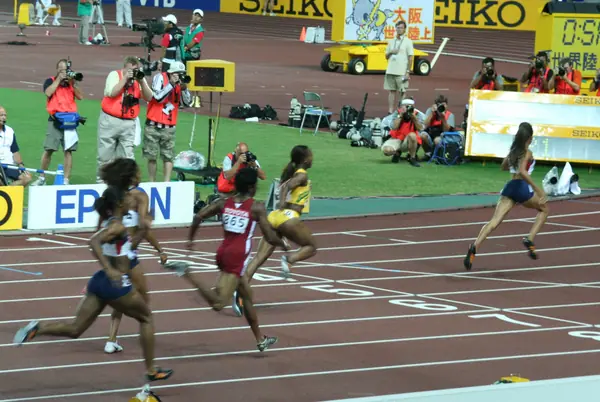
Fast vs Quick vs Rapid vs Swift: The Explainer
This is the section to bookmark, because it answers the question that brings most readers here. Here is the rule, then the proof.
The rule: “Fast” describes the thing that moves. “Rapid” describes the movement or the rate. “Swift” describes movement that is smooth, easy, or decisive. “Quick” describes something done in little time. Test any sentence by asking: am I describing the mover, the movement, the smoothness, or the time taken?
The proof — swap them and listen:
- “A fast horse” is natural. “A rapid horse” is wrong — horses are not rates of change. “A swift horse” is fine and slightly poetic. “A quick horse” is fine in conversation.
- “Rapid growth” is natural. “Fast growth” is common in speech but looser; in formal writing, “rapid” is correct because growth is a rate. “Swift growth” sounds odd. “Quick growth” sounds like the growth was in a hurry.
- “A quick reply” is natural. “A fast reply” is fine too. “A rapid reply” is unusual. “A swift reply” is fine and slightly formal.
- “Swift action” is natural and standard. “Fast action” is fine. “Rapid action” is less common. “Quick action” is fine.
- “A quick shower” is natural. “A fast shower” is fine. “A rapid shower” is wrong. “A swift shower” is wrong — showers are not graceful birds.
Notice the pattern: “quick” is the most flexible of the four, which is why learners overuse it. “Rapid” is the least flexible — it belongs to rates and movements, not to things or people. “Swift” is the most formal and the most graceful. “Fast” is the most general. When in doubt in formal writing, ask whether you mean a rate (use “rapid”), a short time (use “quick”), or a smooth decisive move (use “swift”). If none of those fits, “fast” itself is probably fine.
One more distinction worth memorizing: “speedy” versus “quick.” A “speedy reply” and a “quick reply” both work, but “speedy” suggests the reply arrived without delay and got the job done, while “quick” only says it took little time. A speedy resolution is a good resolution delivered fast. A quick resolution might have been careless. That small shade is why “speedy” appears so often in customer service and thank-you notes.
Quick Comparison: Which Word Fits Your Sentence?
| What you mean | Best words | Avoid here |
|---|---|---|
| A thing moving fast | fast, quick, swift, speedy | rapid, expeditious |
| An action in little time | quick, speedy, brisk, expeditious | rapid, swift |
| A reply or decision | prompt, swift, immediate, decisive | breakneck, hasty |
| A rate of change | rapid, dramatic, sharp, steep | swift, quick |
| Energetic pace | brisk, lively, vigorous | rapid, expeditious |
If your sentence is about a rate — growth, decline, spread, change — the answer is almost always “rapid” or one of its partners. If it is about a person or a vehicle, “fast,” “quick,” or “swift” will do. If it is about a reply, “prompt” is the professional choice.
Antonyms of Fast
The opposite of “fast” is slow for speed, and slowness has its own family: slow, gradual, leisurely, unhurried, sluggish, and delayed. “A gradual change” is the opposite of “a rapid change.” “A leisurely walk” is the opposite of “a brisk walk.” “A delayed reply” is the opposite of “a prompt reply.” For decisions, the opposite is hesitant or indecisive. Example sentences: “The recovery was gradual, taking months rather than weeks.” / “We took a leisurely drive along the coast, stopping wherever we liked.” / “His hesitant answer told the committee everything they needed to know.”
Note the trap: “slow” is not always negative. A “slow morning” can be a compliment, and “slow cooking” is a technique, not a failure. Speed words carry judgment — fast is good when you are late, bad when you are careless — and their opposites carry the same double edge.
Example Sentences in Real Contexts
In a school essay: “The rapid spread of printing changed Europe faster than any war, because ideas travel farther than armies.” / “Her swift response to the crisis showed a kind of leadership that no textbook had taught her.”
In a work email: “Thank you for your prompt reply — it helped us keep the project on schedule.” / “We need an expeditious review of this contract; the client expects an answer by Thursday.” / “Please note the important deadline change: submissions now close on Friday, not Monday.”
In a story: “The deer moved with swift, silent grace through the trees, and then it was gone.” / “He walked at a brisk pace, coat flapping, as if the cold were chasing him.”
In a sports report: “She set a blistering pace in the first lap and never looked back.” / “The team’s rapid counterattack caught the defense off guard twice in five minutes.”
In everyday talk: “That was a quick trip — we were home before dark.” / “Can you give me a speedy answer? I need to book the tickets tonight.” / “The good news is that the plumber gave a speedy reply, so the leak should be fixed by tomorrow.”
Notice how the email examples use “prompt” and “expeditious” — words that would sound stiff in a story but exactly right in an office. Register is doing as much work as meaning here, and the formality table below makes it explicit.

Which Word When? Formality Table
| Word | Formality | One-line difference |
|---|---|---|
| Fast | Neutral | The general word; the thing that moves |
| Quick | Neutral | Done in little time; the most flexible |
| Rapid | Neutral–formal | A rate of change; movements, not things |
| Swift | Neutral–formal | Smooth, easy, or decisive speed |
| Speedy | Neutral | Quick and successful; friendly tone |
| Brisk | Neutral | Energetic and lively pace |
| Prompt | Formal | Without delay; best for replies |
| Expeditious | Very formal | Efficient and fast; business and legal |
| Immediate | Neutral–formal | At once, no delay |
| Fleet | Formal, literary | Fast and light; poetic |
| Breakneck | Informal | Dangerously fast; always a warning |
| Hasty | Neutral–formal | Fast and careless; negative |
| Hurried | Neutral | Fast because time is short; stressed |
In formal writing, the safe set is “rapid,” “prompt,” “expeditious,” “immediate,” and “swift.” In conversation, “fast,” “quick,” “speedy,” and “brisk” cover nearly everything. “Breakneck” and “blistering” belong to stories and sports, not to reports. “Fleet” belongs to poetry and old-fashioned writing — use it once and it charms; use it five times and it looks like a costume.
Common Mistakes with Synonyms for Fast
Mistake 1: “Hasty” as a compliment. “Hasty” never means “efficiently fast.” It means “too fast to be careful,” and it is always a criticism. “A hasty decision” is a bad decision made too quickly. “A hasty reply” is a reply that missed something. If you mean fast and good, say “prompt,” “swift,” or “expeditious.” If you mean fast and careless, “hasty” is exactly right — and that is the only time to use it.
Mistake 2: “Rapid” for people and things. “A rapid runner” and “a rapid car” are mistakes that mark a writer as a learner. Runners and cars are things that move, so they are “fast,” “quick,” or “swift.” “Rapid” belongs to movements, currents, growth, decline, and change. The test from the explainer section catches this every time: if you can put “the rate of” in front of it (“the rate of growth”), “rapid” works. If you cannot (“the rate of runner”), it does not.
Mistake 3: Confusing the fixed “fast.” “Hold fast” does not mean “hold quickly.” “Fast asleep” does not mean “quickly asleep.” “A fast friend” is not a speedy friend. When “fast” means firmly fixed, loyal, or deeply asleep, no speed synonym works — you need “firm,” “loyal,” or “deeply.” This mistake is rare in native writing but common for learners, because dictionaries list the meanings side by side without warning you that they never mix.
Mistake 4: “Fast” for a bad situation. “A fast breakup,” “a fast failure” — speed is not always a virtue, and praising speed in the wrong place confuses the reader. A breakup that happened fast is “sudden” or “abrupt,” not “fast.” A failure that happened fast is “sudden” or “swift,” and “swift” here carries the old sense of something falling quickly. If the speed made things worse, name the harm: “a rushed launch,” “a hurried decision.” The bad guide has more on words that carry blame as well as meaning.
Mistake 5: “Very fast” instead of a better word. “Very fast” could be rapid, swift, breakneck, or blistering, depending on what is moving and how it feels. The “very” habit is the same one that weakens happy (“very happy” should be thrilled) and every other adjective family on this site. Treat “very” as a signal, not a solution.
Mistake 6: “Fastly” — a word that does not exist. The adverb of “fast” is “fast” itself: “He runs fast,” not “he runs fastly.” “Quickly” is the adverb of “quick,” “rapidly” of “rapid,” “swiftly” of “swift.” This is a small mistake with a big cost, because it appears in the first sentence of many learner essays and colors everything after it.

Frequently Asked Questions
What is the difference between fast and quick? “Fast” usually describes the thing that moves (a fast car, a fast runner), while “quick” usually describes something done in little time (a quick shower, a quick reply). They overlap a lot in conversation — “a fast reply” and “a quick reply” both work — but in formal writing the distinction holds: use “fast” for movers and “quick” for short actions.
What is the difference between rapid and swift? “Rapid” describes a rate or a movement itself (rapid growth, a rapid current). “Swift” describes movement that is smooth, easy, or decisive (a swift bird, swift action). A river’s current is rapid; a bird’s flight is swift. “Rapid” is about measurement, “swift” is about grace and decision.
Is “speedy” formal or informal? “Speedy” is neutral and friendly — fine in emails, customer service, and conversation, but a little light for a formal report. In a report, “prompt” or “expeditious” is stronger. “Thank you for the speedy reply” is perfect English; “we request a speedy review” is fine, but “we request an expeditious review” sounds more professional.
Can “fast” mean something other than speed? Yes. “Hold fast” means hold firmly. “Fast asleep” means deeply asleep. “A fast friend” means a loyal friend. And “to fast” means to abstain from food. None of these uses take speed synonyms, so if your sentence uses one of them, you need a different word entirely — “firm,” “loyal,” “deeply,” or “abstain.”
What is a formal synonym for a fast reply? “Prompt” is the best formal word for a reply: “Thank you for your prompt response.” “Swift” also works and sounds slightly more literary. “Expeditious” is the most formal option, best for business and legal writing. Avoid “hasty” — it means careless, not efficient.
Related words
Quick, rapid, swift, speedy, brisk, prompt, expeditious, immediate, fleet, breakneck. The speed family rewards precision more than any other group on this site, because the wrong speed word does not just sound odd — it changes the meaning. If your sentence is about importance rather than speed, the word you actually need is probably important, not a faster adjective.


SynonymsKey helps students and writers find the right word, with synonyms grouped by meaning, antonyms, and clear examples for everyday writing.